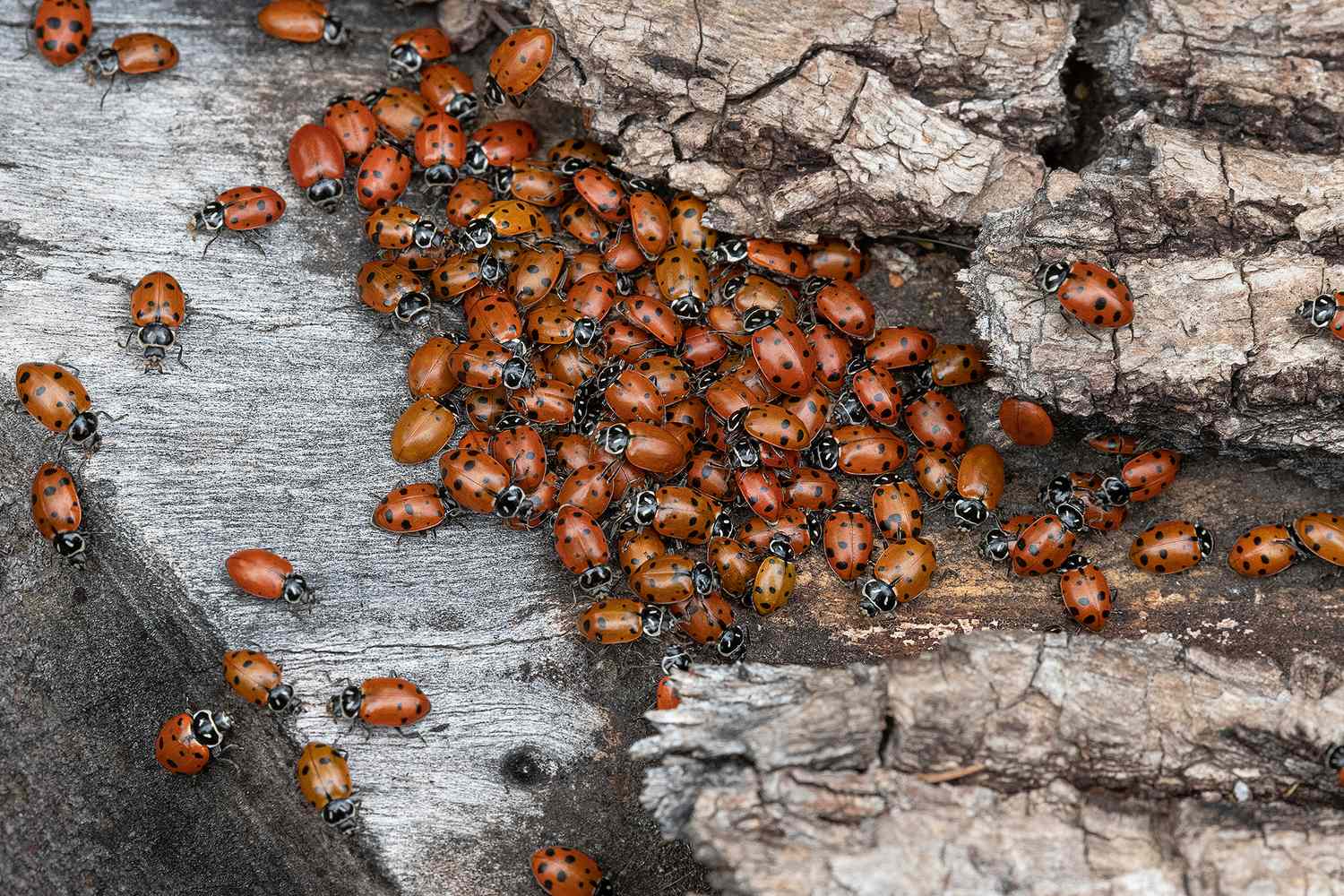
Beneficial garden predators that become a major fall nuisance — aggregating by the hundreds on sun-warmed walls seeking overwintering sites. The fix is exclusion before October, not chemical treatment after they arrive.
Fall InvaderExclusionVacuum RemovalBotanical Repellent
🔎Identification & Behavior
🐞
Multicolored Asian Lady Beetle
Variable color from pale orange to deep red, 5–8 mm, with 0–20 black spots. The key identifier is a distinctive M-shaped (or W-shaped) black marking on the white area behind the head (pronotum). Native ladybugs lack this marking. Dome-shaped body, short antennae.
🍂
Fall Aggregation Behavior
In October–November, beetles aggregate by the hundreds on sun-warmed south- and west-facing walls, seeking cracks and gaps to overwinter inside wall voids. They are attracted to light-colored structures and contrasting surfaces. Once inside, they cluster in attics, wall voids, and window frames until spring.
⚠️
Nuisance — Not Dangerous
When disturbed or crushed, they secrete a foul-smelling yellowish fluid (reflex bleeding) that stains walls, fabrics, and curtains. Large indoor populations can trigger allergic reactions in sensitive individuals. They do not bite, sting, transmit disease, or damage structures.
🌱
vs. Native Ladybugs
Native ladybugs (e.g., Coccinella septempunctata) do not aggregate on homes or overwinter indoors. The M-shaped marking behind the head is the fastest way to distinguish Asian lady beetles from beneficial native species. Both eat aphids — Asian lady beetles are voracious garden predators.
📋IPM Action Steps
1
Identify the Species
Confirm Asian lady beetle by the M-shaped black marking on the white pronotum behind the head. Color varies widely (pale orange to deep red, 0–20 spots). Distinguish from native ladybugs which lack this marking and do not aggregate on buildings.
2
Seal Entry Points Before October
This is the single most effective step. Focus on south- and west-facing walls: caulk around windows, door frames, utility penetrations, soffits, and fascia gaps. Install door sweeps. Screen attic and soffit vents with fine mesh. Seal where siding meets the foundation. Timing is critical — seal before fall aggregation begins.
3
Vacuum Live Beetles Indoors
Use a dedicated shop-vac or immediately bag and dispose of the vacuum bag. Regular vacuums will retain the foul odor from reflex bleeding fluid. Never crush beetles — the yellowish secretion permanently stains walls and fabrics. Vacuum gently to minimize stress secretions.
4
Deploy Light Traps
Place indoor light traps (UV or LED) in attics, window bays, and rooms where beetles congregate. Beetles are attracted to light, especially when emerging from wall voids in spring. Light traps are passive, non-toxic, and effective for ongoing capture.
5
Botanical Repellent at Entry Points
Apply peppermint or citrus oil spray around exterior window frames, door frames, and soffits on south- and west-facing walls in September–October before aggregation season. Reapply every 5–7 days. This is a deterrent supplement to exclusion, not a replacement.
6
Do NOT Crush — Staining Risk
Crushed beetles release yellow hemolymph that permanently stains walls, ceilings, curtains, and light-colored fabrics. Always vacuum or gently sweep into a container. Educate the client to avoid swatting or squishing beetles on any surface.
7
Evaluate & Plan for Next Season
After the fall invasion subsides, inspect for remaining gaps and add to the exclusion plan for next September. Document which walls and entry points were worst affected. Schedule a pre-season exclusion visit for late September the following year.
🛠️Prevention & Cultural Controls
🔒
Exclusion — South & West Walls
Focus sealing efforts on sun-warmed south- and west-facing walls where beetles aggregate. Caulk around windows, door frames, utility penetrations, and where siding meets the foundation. Seal gaps at soffits, fascia boards, and roofline. Install fine-mesh screens on attic and soffit vents.
🚪
Door Sweeps & Weather Stripping
Install tight-fitting door sweeps on all exterior doors, especially garage entry doors. Replace worn weather stripping around windows and doors. Check sliding door tracks for gaps. Even small gaps allow hundreds of beetles inside during peak aggregation.
📅
Timing Is Everything
Complete all exclusion work by late September — before aggregation begins in October. Once beetles are inside wall voids, exclusion traps them in and they emerge indoors through spring. Pre-season preparation is the entire strategy.
⚗️Application Techniques
🔨 Exclusion — Caulk, Screen & Seal
Walk the exterior and focus on south- and west-facing walls where sun warmth attracts aggregation.
Caulk all gaps around windows, door frames, utility penetrations (cable, HVAC, plumbing), and where siding meets the foundation.
Seal gaps at soffits, fascia boards, and roofline junctions with exterior-grade silicone or foam sealant.
Screen attic vents and soffit vents with fine mesh (1/16” or smaller) to prevent entry through ventilation.
Install or replace door sweeps on all exterior doors. Check garage door seal for gaps.
Complete all work by late September before aggregation begins.
🧹 Vacuum Removal — Gentle Capture Without Staining
Use a dedicated shop-vac for beetle collection, or immediately bag and remove the vacuum bag from a regular vacuum.
Vacuum gently — rough handling triggers reflex bleeding and the foul odor will persist in the vacuum.
Dispose of collected beetles outdoors in a sealed bag. Do not dump back into the garden near the house.
For small numbers, gently sweep into a container and release outdoors away from the structure.
Never crush or swat — the yellowish hemolymph permanently stains walls, ceilings, and fabrics.
Apply peppermint or citrus oil spray around exterior window frames, door frames, and soffits on south- and west-facing walls.
Begin applications in mid-September, before beetles begin aggregating.
Spray a 6–12 inch band around entry points and along the roofline where beetles land.
Reapply every 5–7 days outdoors, or after rain.
This is a deterrent supplement to exclusion, not a standalone solution. Without sealing gaps, repellent alone will not prevent entry.
🛒Recommended Products
🌱
Mighty Mint Peppermint Oil Spray
Concentrated peppermint oil in water base. Apply at exterior entry points on south- and west-facing walls in September–October. Pleasant scent, safe for families and pets once dry. Reapply weekly or after rain. Supplement to exclusion.
Botanical / Repellent
🧹
Dedicated Shop-Vac for Beetle Removal
Use a dedicated shop-vac (not your household vacuum) for collecting beetles indoors. The foul odor from reflex bleeding persists in vacuum canisters. Alternatively, immediately bag and dispose of the regular vacuum bag after each use.
Mechanical / Non-Toxic
💡
Indoor Light Traps (UV or LED)
Place in attics, window bays, and rooms where beetles congregate. Beetles are strongly attracted to light when emerging from wall voids. Passive, non-toxic capture. Especially effective in spring when overwintering beetles become active indoors.
Light Trap / Non-Toxic
🔨
Exterior Caulk & Weather Stripping
Exterior-grade silicone caulk for gaps around windows, doors, and utility penetrations. Foam sealant for larger gaps at soffits and roofline. Replacement door sweeps and weather stripping. The primary and most effective tool for beetle management.
Exclusion / Prevention
▶️Training Videos
🔨
Exclusion
Fall Pest Exclusion — Sealing South & West Walls
Caulking windows, sealing soffits, screening vents, and installing door sweeps before October aggregation season.
Search: Fall Pest Exclusion Home Sealing Tutorial
🧹
Removal
Vacuuming Asian Lady Beetles — Stain-Free Technique
Using a dedicated shop-vac, gentle capture to minimize reflex bleeding, proper disposal, and protecting fabrics from staining.
Search: Asian Lady Beetle Vacuum Removal Without Staining
Spray technique at entry points on south and west walls. Timing, coverage band, and reapplication schedule for fall beetle deterrence.
Search: Peppermint Oil Spray Fall Pest Repellent
💡
Light Traps
Indoor Light Traps for Overwintering Beetles
Placement in attics and window bays, trap selection, and timing for spring emergence when beetles become active indoors.
Search: Indoor Light Trap Asian Lady Beetle Control
⚠️Warnings & Herbal Shield Standards
🌱
Beneficial Garden Insect — Do Not Eliminate Outdoors: Asian lady beetles are voracious aphid predators and provide significant garden pest control. Treatment should focus exclusively on keeping them outside the home. Never recommend outdoor elimination — they are a net positive for the landscape.
🔒
Exclusion Is the Entire Strategy: Sealing entry points before October is the only reliable way to prevent indoor invasions. Botanical sprays, vacuuming, and light traps are all secondary to exclusion. Without sealing, beetles will return every fall.
⚠️
Do NOT Crush — Staining Risk: Crushed beetles release yellow hemolymph that permanently stains walls, ceilings, curtains, and light-colored fabrics. Always vacuum gently or sweep into a container. Never swat beetles resting on surfaces.
🚫
No Foggers or Broadcast Sprays: Indoor foggers and broadcast sprays are ineffective against beetles in wall voids, kill beneficial insects, contaminate living spaces, and are inconsistent with the Herbal Shield brand promise. Bifenthrin, permethrin, and similar synthetics are never used.
🩹
Allergy Awareness: Large indoor populations of Asian lady beetles can trigger allergic reactions in sensitive individuals, including respiratory symptoms and skin irritation from contact with reflex bleeding fluid. Prompt vacuuming and exclusion are the appropriate responses — not chemical treatment.
💬
Client Script: “These are Asian lady beetles — they look like ladybugs but they’re the ones that swarm buildings in the fall looking for a warm place to overwinter. They don’t bite or cause damage, but they have an unpleasant defensive fluid that stains if you crush them. The best approach is sealing up entry points on the sunny side of your home before October, and vacuuming any that get inside. They’re actually great for your garden — they eat enormous numbers of aphids.”
💬
Client Script — Why We Don’t Spray: “The reason we don’t spray for Asian lady beetles is that spraying the outside of your home kills the beneficial ones in your garden and does nothing about the ones already inside your walls. Foggers indoors just contaminate your living space without reaching the wall voids where they’re hiding. The beetles come back every fall because they’re attracted to warm, light-colored surfaces — not because of a chemical deficit. When we seal the cracks and gaps on your south and west walls, they physically can’t get in. That’s a permanent fix that works every season.”