← Household Ants 🖨 Care Card Bed Bugs →
Structural Pest — Field Guide

Carpenter Ants
Camponotus spp.

Wood-excavating ants that target moisture-damaged structures. Learn nest location, void treatment, moisture control, and exclusion techniques.

Structural Species Moisture-Driven Void Treatment
🔍Identification & Behavior
Ant
Physical Description
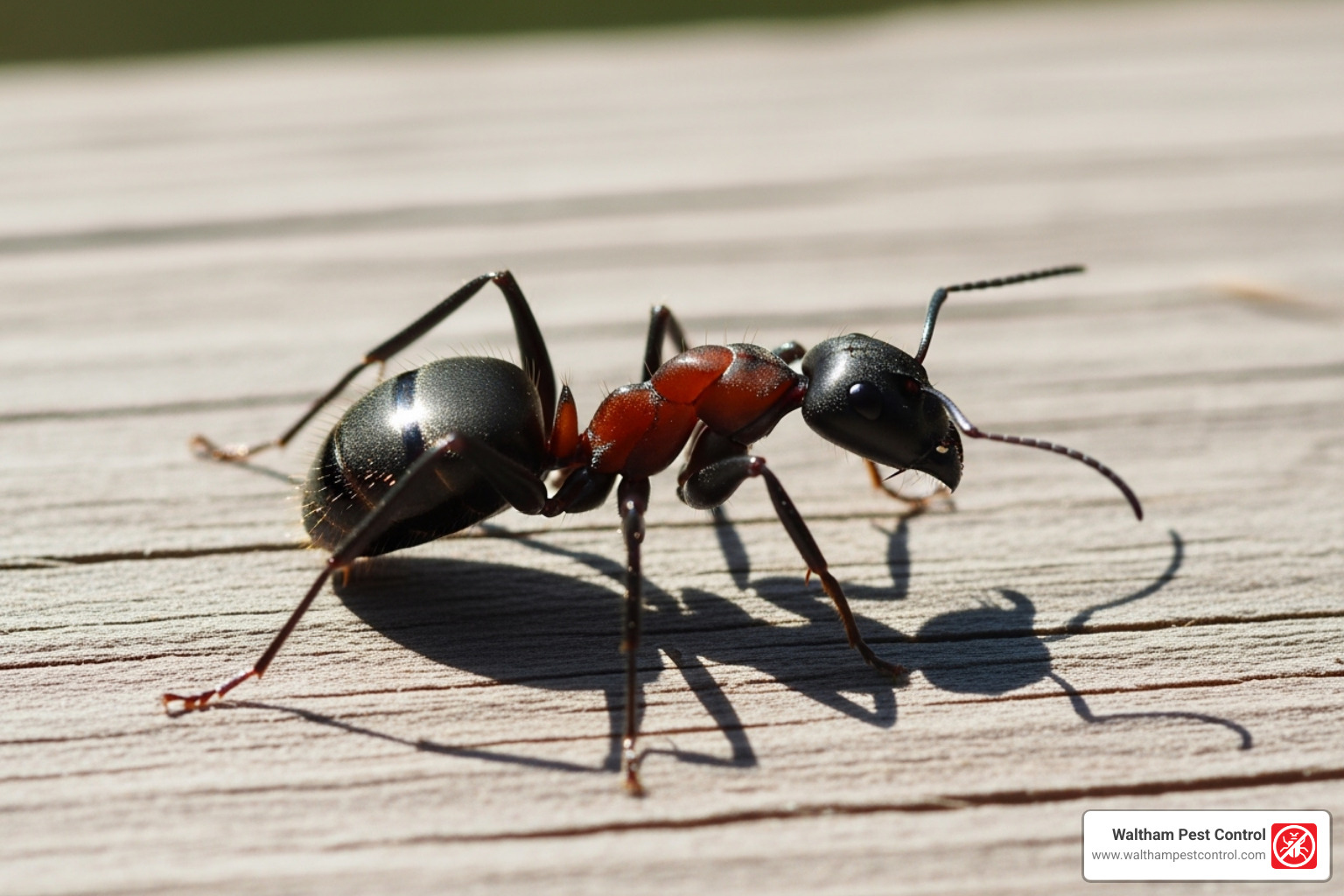
Large ants, 6–13mm. Typically black, though some species are black and red. Workers are polymorphic — major workers are notably large. Key ID: smooth, evenly-rounded thorax (top profile). Unlike termites, carpenter ants do not eat wood — they excavate it.
🏠
Nesting Behavior
Primary nests outdoors in decayed/moist wood (stumps, logs, dead trees). Satellite colonies form inside structures near moisture damage — window frames, roof eaves, attic areas, behind dishwashers, below bathroom tile. The indoor colony is usually a satellite — finding and eliminating the outdoor parent colony is key.
🔎
Signs of Activity
Coarse, sawdust-like frass (wood shavings mixed with insect parts) near openings. Large worker ants foraging at night — especially on window sills, near moisture. Rustling sounds inside walls. Small, perfectly oval exit holes in wood surfaces.
💧
Attractants
Moisture is the primary driver — leaking pipes, faulty gutters, condensation on windows, poorly ventilated crawl spaces. Also attracted by honeydew from aphids and scale insects on outdoor plants. Removing moisture sources is always Step 1.
📋IPM Action Steps
1
Locate the Nest
Follow ant trails at night (they're most active after dusk). Place small amounts of honey or sugar water at potential entry points and observe. Tap suspected wood — hollow, papery sound indicates excavation. Probe frass piles with a pin to find the entry point.
2
Confirm Active Infestation
Fresh frass (light-colored, clean wood shavings) = active colony. Old frass (dark, compacted) may indicate a previous colony. Fresh frass with insect body parts confirms current activity and warrants immediate treatment.
3
Eliminate All Moisture Sources
Repair leaking pipes and gutters. Improve crawl space ventilation. Fix flashing and roof drip edges. Correct grading that directs water toward the foundation. This is the most important long-term step — moist wood will attract new colonies.
4
Remove Harborage & Exclusion
Remove or treat infested wood if structurally feasible. Seal all foundation cracks, pipe penetrations, and utility entry points. Prune trees and vegetation 12+ inches from the structure — branches create bridges. Remove outdoor stumps and wood piles near the building.
5
Apply Least-Toxic Dusts to Voids
Drill small access holes (1/4 inch) at nest locations when needed. Puff boric acid or DE dust into wall voids, window frame cavities, and trail paths using a bellows duster. Apply thin layers — dust piles are less effective than a fine coating.
6
Outdoor Nest Elimination
If the primary outdoor nest is identified, apply boric acid dust directly into the excavation or pour boiling water for accessible outdoor nests. Treat the parent colony first — the satellite colony inside will collapse without it.
7
Ongoing Prevention
Inspect exterior annually. Maintain gutter systems. Replace any soft or discolored wood immediately. Keep crawl spaces dry and ventilated. Use naturally rot-resistant woods (cedar, redwood) for any exterior repairs.
🛠️Prevention & Cultural Controls
💧
Moisture Control
Fix all roof leaks, gutter overflows, and plumbing drips immediately — carpenter ants nest in wet or decaying wood, not dry wood. Address condensation on pipes and in crawl spaces. Install vapor barriers in damp crawl spaces.
🪵
Wood-to-Soil Contact
Eliminate all direct contact between wood and soil — deck posts, fence boards, siding, door frames. Raise wood at least 6 inches above grade. Replace any structurally compromised wood before treating, as it will continue to attract colonies.
🔥
Firewood & Landscaping
Store firewood at least 20 feet from the foundation and elevated off the ground. Remove dead stumps and logs from the yard — they are prime satellite nesting sites. Trim branches that touch or overhang the roof to eliminate ant highways.
⚗️Application Techniques
🍯 Gel Bait Tracking — Find the Nest First
  1. Place small dabs of honey or sugar-based gel near suspected entry points at dusk.
  2. Observe which ants pick up the bait and follow them — they lead directly to the nest.
  3. This tracking step often saves hours of guessing and pinpoints void entry locations for dust application.
  4. Do not attempt to kill tracked ants — let them guide you to the colony.
💨 Boric Acid & DE Dust — Void & Trail Treatment
  1. Use a bellows or hand duster to puff fine dust into identified voids and trail pathways.
  2. For wall voids: drill 1/4-inch holes every 12–18 inches along the trail path. Insert duster tip and puff gently. Plug holes with a wood filler after application.
  3. Apply thin layers only — visible piles repel rather than attract ants walking through.
  4. Keep dust dry — moisture deactivates both DE and boric acid.
  5. Avoid runoff into drains or water features.
  6. Wear PPE (dust mask, gloves) during all dust applications.
🌿 Peppermint Oil — Perimeter & Entry Points

Apply concentrated peppermint oil spray along the exterior foundation line, around window frames, and at confirmed entry points. Reapply every 5–7 days. While this won't eliminate an established colony, it creates a deterrent barrier that slows new foraging and reinforces the exclusion work.

🛒Recommended Products
🧪
Harris Boric Acid Powder
99% boric acid powder with precision tip applicator. Primary tool for wall void and trail treatment. Effective at very low concentrations — ants groom it off legs and ingest. Kills colony members over 1–3 days of contact.
Boric Acid / Slow-Kill
⚗️
Harris Food-Grade Diatomaceous Earth
Apply in cracks and trail paths as a mechanical desiccant. Best used in combination with boric acid — DE provides immediate physical action while boric acid spreads through the colony via grooming.
Food-Grade DE / Mechanical
🌱
Mighty Mint Peppermint Oil
Concentrated botanical spray for exterior perimeter and entry point treatment. Disrupts chemical trails and deters new foragers from entering treated areas. Reapply every 5–7 days or after rain.
Botanical / Deterrent
🔩
Xcluder Rodent & Pest Fill Fabric
Steel wool and polymer mesh for sealing large structural gaps where carpenter ants enter. Combine with silicone caulk over the top. Unlike standard steel wool, Xcluder resists rust and compaction over time.
Exclusion / Physical Barrier
▶️Training Videos
Ant
Nest Location
Finding & Identifying Carpenter Ant Nests
Using bait trails to locate nests, reading frass evidence, nighttime inspection technique, and probing for hollow wood voids.
Search: How to Find Carpenter Ant Nest
💨
Dust Application
Boric Acid Dust for Carpenter Ants — Void Injection
Drilling access holes, puffing boric acid dust into wall voids and trail paths, keeping layers thin, sealing holes after application.
Search: Boric Acid Dust Carpenter Ants IPM
🔒
Exclusion
Exterior Exclusion — Sealing Carpenter Ant Entry Points
Caulking foundation cracks, sealing pipe penetrations, using copper mesh in large gaps, and addressing vegetation contact with the structure.
Search: Carpenter Ant Exclusion Methods
💧
Moisture Control
Moisture Damage & Carpenter Ant Prevention
Identifying and correcting the moisture conditions that attract carpenter ants — gutter issues, crawl space ventilation, flashing, and grading.
Search: Moisture Control Carpenter Ant Prevention
⚠️Warnings & Herbal Shield Standards
🚫
Act Early — Structural Damage is Cumulative: Unlike termites, carpenter ants cause damage slowly. But a large, established colony over several years can cause significant structural damage in load-bearing areas. Early identification and treatment is always less costly than delayed action.
🧤
Always Use PPE for Dusts: Wear a dust mask (N95 minimum), gloves, and eye protection when applying boric acid or DE dusts. Avoid puffing in areas with open HVAC returns — seal registers before treatment.
💬
Client Script: "Carpenter ants don't eat wood — they excavate moist or damaged wood for nesting. Our approach is to locate the nest, eliminate the moisture that attracted them, treat the void with a very small amount of food-safe boric acid dust, and seal the entry points. The nest typically collapses within 1–3 weeks."
🚫
Never Spray When a Wall Void Has Been Opened: If a client or contractor has opened a wall and exposed a carpenter ant gallery, applying any spray directly into the void disperses the colony rapidly into new areas. Use only dry boric acid dust, applied sparingly at the gallery entrance. Seal the void only after confirming the colony has collapsed (no frass production, no ant movement for 2+ weeks).
🏚️
When to Recommend a Structural Inspection: If you find: frass that includes insulation fragments (indicates nest in wall insulation), multiple satellite colonies, or wood deflection/soft spots near the nest site — recommend a licensed home inspector or structural engineer before sealing. Carpenter ant damage can mask or co-occur with water damage, mold, and structural compromise that pest control alone cannot address.