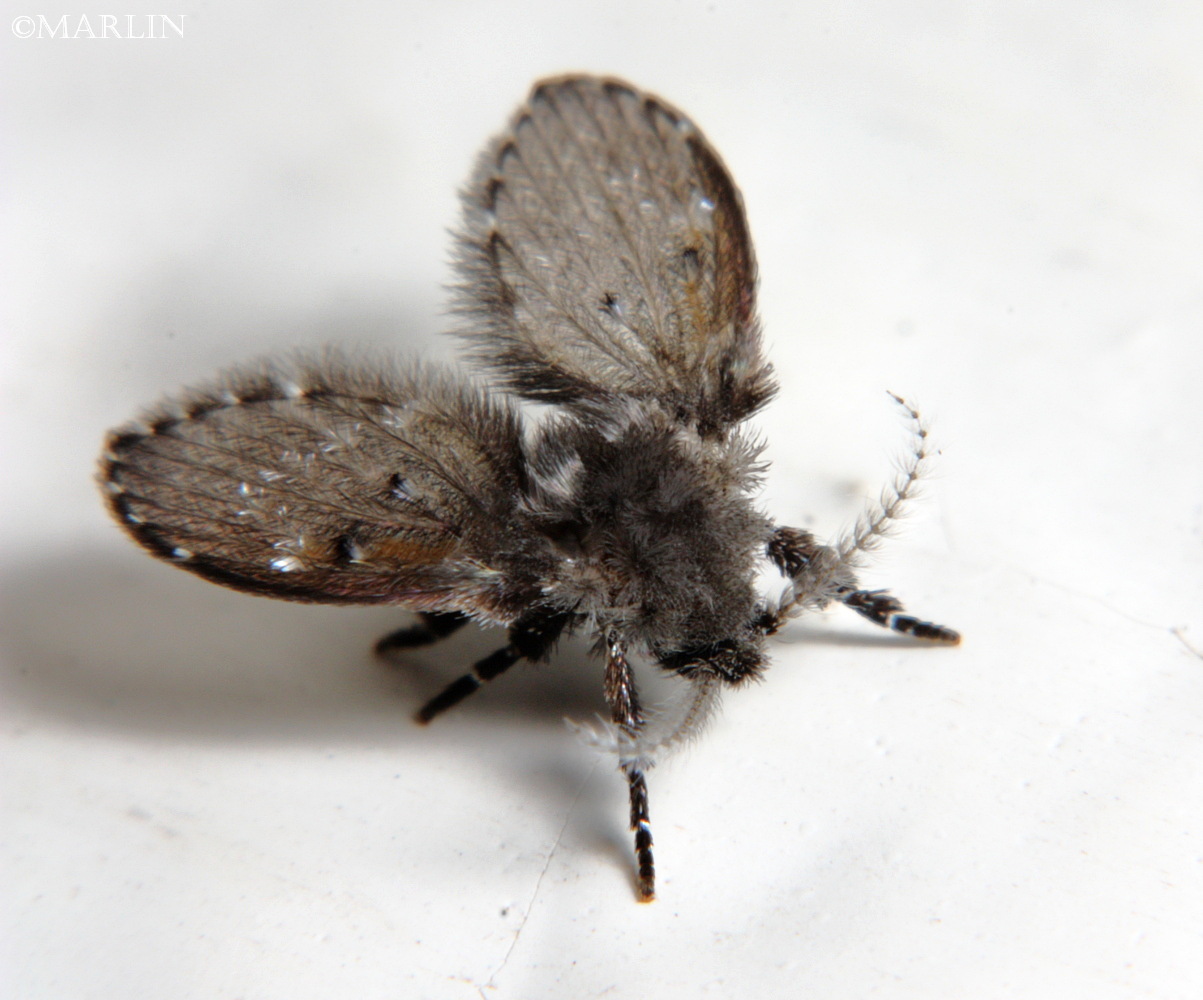
Tiny, fuzzy, moth-like flies that breed in organic biofilm inside drains. No spray will fix this — the only real solution is physically removing the biofilm where they breed. Once it’s gone, the flies stop within a week.
Drain CleaningBiofilm RemovalSanitationMoisture Pest
🔎Identification & Behavior
🪰
Drain Flies / Moth Flies
Tiny (2–5 mm), gray or tan, with fuzzy, moth-like wings held roof-like over the body at rest. Weak, fluttering flight — they hop and flutter short distances rather than flying strongly. Often found resting on walls and ceilings near bathrooms and kitchens. Attracted to light.
🧼
Breeding in Biofilm
Larvae develop in the organic biofilm (slimy buildup of bacteria, fungi, and organic matter) that lines the inside of drains, sump pits, AC condensate drip pans, floor drains, and sewage systems. The biofilm is the food source and the breeding site — remove it and the cycle stops completely.
💦
Not a Sign of Filth
Even spotlessly clean homes can have drain fly issues. Biofilm accumulates naturally inside drain pipes over time, especially in infrequently used drains — guest bathrooms, basement floor drains, and laundry sinks are common culprits. Regular drain use and maintenance prevents buildup.
✓️
Harmless — No Health Risk
Drain flies do not bite, sting, or spread disease in residential settings. They are strictly a nuisance pest. Their short lifespan (2–3 weeks) means populations crash rapidly once the biofilm breeding site is eliminated. They do not infest food, fabrics, or structures.
📋IPM Action Steps
1
Identify the Source Drain — Tape Test
Cover each suspected drain with a strip of clear packing tape (sticky side down) overnight. In the morning, check for tiny flies trapped on the tape. This pinpoints exactly which drain is the breeding source. Test every drain in the area: sink, shower, tub, floor drains, and overflow holes.
2
Clean the Organic Biofilm
This is the only real fix. Remove the drain cover and scrub the inside of the drain pipe with a stiff drain brush, working 12–18 inches deep. The goal is to physically dislodge the slimy biofilm coating the pipe walls. Rinse thoroughly with hot water. This step alone resolves most infestations.
3
Enzyme Drain Treatment
After brushing, apply an enzyme-based drain gel (InVade Bio Drain or similar) to dissolve remaining biofilm. Pour into the drain per label directions, typically at night so the product sits undisturbed for 6–8 hours. Repeat nightly for 5–7 consecutive nights. Enzymes digest the organic matter that bleach cannot remove.
4
Check All Other Potential Sources
Inspect and test every potential biofilm site: sump pump pit, AC condensate drip pan, garbage disposal, floor drains in basement and garage, washing machine drain, rarely-used guest bathroom drains, and overflow drain holes in sinks and tubs. Any standing organic film can sustain a population.
5
Address Standing Water & Moisture
Fix any dripping faucets, leaking pipes, or condensation around AC units. Ensure sump pump cover fits tightly. Clean AC drip pan and confirm the condensate line drains freely. Standing moisture with organic matter creates ideal breeding conditions.
6
Monitor for 2 Weeks
Adult drain flies live 2–3 weeks. After biofilm removal, existing adults will die off naturally — no need to spray them. If new adults continue appearing after 2 weeks, a breeding source was missed. Repeat the tape test on all drains to find the overlooked source.
7
Establish Maintenance Schedule
Prevent recurrence with monthly enzyme drain treatment in problem drains. Run water weekly in all infrequently used drains to keep traps full and flush developing biofilm. Clean AC drip pans quarterly. These simple habits prevent re-establishment permanently.
🛠️Prevention & Cultural Controls
💧
Regular Drain Use
Run water through every drain in the house at least once per week, including guest bathrooms, basement floor drains, and laundry sinks. This flushes developing biofilm before it accumulates and keeps drain traps full (preventing sewer gas and fly access from below).
🧼
Monthly Enzyme Maintenance
Apply enzyme drain gel once per month in all bathroom and kitchen drains as preventive maintenance. Enzymes digest organic buildup before it becomes a breeding site. Far more effective than bleach, which runs past biofilm without dissolving it. Safe for all pipe types.
❄️
AC & Sump Maintenance
Clean AC condensate drip pans quarterly and confirm the condensate drain line flows freely. Ensure sump pump pit covers fit tightly. Check floor drains in basement and garage for biofilm buildup. These overlooked sources sustain drain fly populations even when sink drains are clean.
⚗️Application Techniques
🧹 Drain Brush & Physical Biofilm Removal
Remove the drain cover or stopper completely.
Insert a stiff drain brush (long-handled bottle brush or dedicated drain brush) into the pipe opening.
Scrub the inner pipe walls vigorously, working 12–18 inches deep in a twisting motion. You’ll feel the slimy biofilm coating break loose.
Flush with very hot (not boiling) water for 30–60 seconds to wash away dislodged biofilm.
Repeat for every drain that tested positive in the tape test.
This physical removal is the single most important step — enzyme treatment alone cannot replace it for heavy buildup.
🧼 Enzyme Gel Application — Dissolving Residual Biofilm
After physical brushing, apply enzyme drain gel (InVade Bio Drain or equivalent) per label directions — typically 2–4 oz poured directly into the drain.
Apply at night so the product sits undisturbed for 6–8 hours without water flow diluting it.
Repeat nightly for 5–7 consecutive nights to fully digest remaining biofilm layers.
After the initial treatment cycle, switch to monthly maintenance applications to prevent reaccumulation.
Enzyme gel is safe for all pipe types (PVC, copper, cast iron) and septic systems. It contains naturally occurring bacteria that digest organic matter.
🗒️ Tape Test Procedure — Finding the Source Drain
Cut strips of clear packing tape wide enough to cover each drain opening (3–4 inches).
Place tape sticky side down over the drain, leaving small gaps at the edges for airflow (fully sealed tape prevents flies from reaching it).
Apply tape in the evening and check in the morning for tiny flies stuck to the underside.
Test every drain in the affected area: sink, shower, tub, floor drain, and overflow holes.
Positive results pinpoint the exact breeding source. Test for 2–3 consecutive nights for accuracy, as emergence varies night to night.
A negative tape test on all drains means the source is elsewhere — check sump pit, AC drip pan, or hidden moisture sources.
🛒Recommended Products
🧼
InVade Bio Drain Gel (or Equivalent Enzyme Gel)
Enzyme-based drain gel containing naturally occurring bacteria that digest organic biofilm. Apply nightly for 5–7 days for active infestations, then monthly for maintenance. Safe for all pipe types and septic systems. The primary treatment tool after physical brushing.
Enzyme / Biofilm Digestion
🧹
Drain Brush (Long-Handled)
Stiff-bristle brush designed for cleaning inside drain pipes. Work 12–18 inches deep with a twisting motion to dislodge biofilm from pipe walls. The single most important tool — physical removal is more effective than any chemical product alone.
Mechanical / Physical Removal
🗒️
Clear Packing Tape
Standard clear packing tape for the overnight tape test. Place sticky side down over suspected drains to trap emerging flies and identify the exact breeding source. Essential diagnostic tool before treatment begins. Available at any office supply or hardware store.
Diagnostic / Monitoring
▶️Training Videos
🗒️
Diagnostic
Drain Fly Tape Test — Finding the Source
Step-by-step tape test procedure. Covering drains overnight, checking for trapped flies, and systematically identifying the breeding source.
Search: Drain Fly Tape Test Identification Tutorial
Running infrequently used drains weekly, monthly enzyme applications, AC drip pan cleaning, and sump pump pit inspection.
Search: Drain Fly Prevention Maintenance Schedule
⚠️Warnings & Herbal Shield Standards
🚫
Bleach Does NOT Fix Drain Flies: Bleach poured down a drain runs past the biofilm without removing it. The biofilm clings to pipe walls and bleach flows through the center of the pipe. Even repeated bleach treatments fail because the breeding substrate remains intact. Physical removal + enzyme treatment is the only effective approach.
🚫
Insecticide Sprays Are Useless: Spraying adult drain flies kills the ones visible today, but new adults emerge from the biofilm daily. Foggers and surface sprays have zero impact on the larvae developing inside the drain pipe. Spraying creates a false sense of progress while the population regenerates continuously.
🔬
100% a Sanitation Fix: Drain fly control is entirely about removing the organic biofilm where larvae develop. No chemical, botanical, or mechanical trap can substitute for cleaning the drain itself. Once the biofilm is gone, the breeding cycle stops and existing adults die off within 2–3 weeks.
✓️
Not a Sign of a Dirty Home: Biofilm accumulates naturally inside drain pipes over time, even in very clean homes. Infrequently used drains are the most common culprit. Reassure clients that this is a plumbing maintenance issue, not a hygiene issue.
⚠️
Missed Sources = Recurring Problem: If flies persist after treating the obvious drain, a secondary source exists. Systematically tape-test every drain, check sump pits, AC drip pans, floor drains, garbage disposals, and overflow holes. The overlooked source is almost always a rarely-used floor drain or condensate pan.
💬
Client Script: “These tiny flies are breeding in organic buildup inside your drain. No spray will fix this — we need to clean the drain itself. We’ll brush out the biofilm, then use an enzyme gel to dissolve what’s left. Once the breeding material is gone, the flies stop within a week or two. It’s not a sign of a dirty home — biofilm builds up naturally in any drain that isn’t used regularly.”
💬
Client Script — Why We Don’t Spray: “The reason we don’t spray for drain flies is that the flies you see are just the adults — there are larvae developing in a slimy film inside the pipe that no spray can reach. If we kill the adults on the wall today, new ones come out of the drain tomorrow. Bleach doesn’t work either because it flows through the center of the pipe without touching the buildup on the walls. The only thing that actually stops them is physically cleaning the biofilm out of the drain and then using an enzyme gel to digest what’s left. After that, there’s nothing for them to breed in and the problem is solved.”