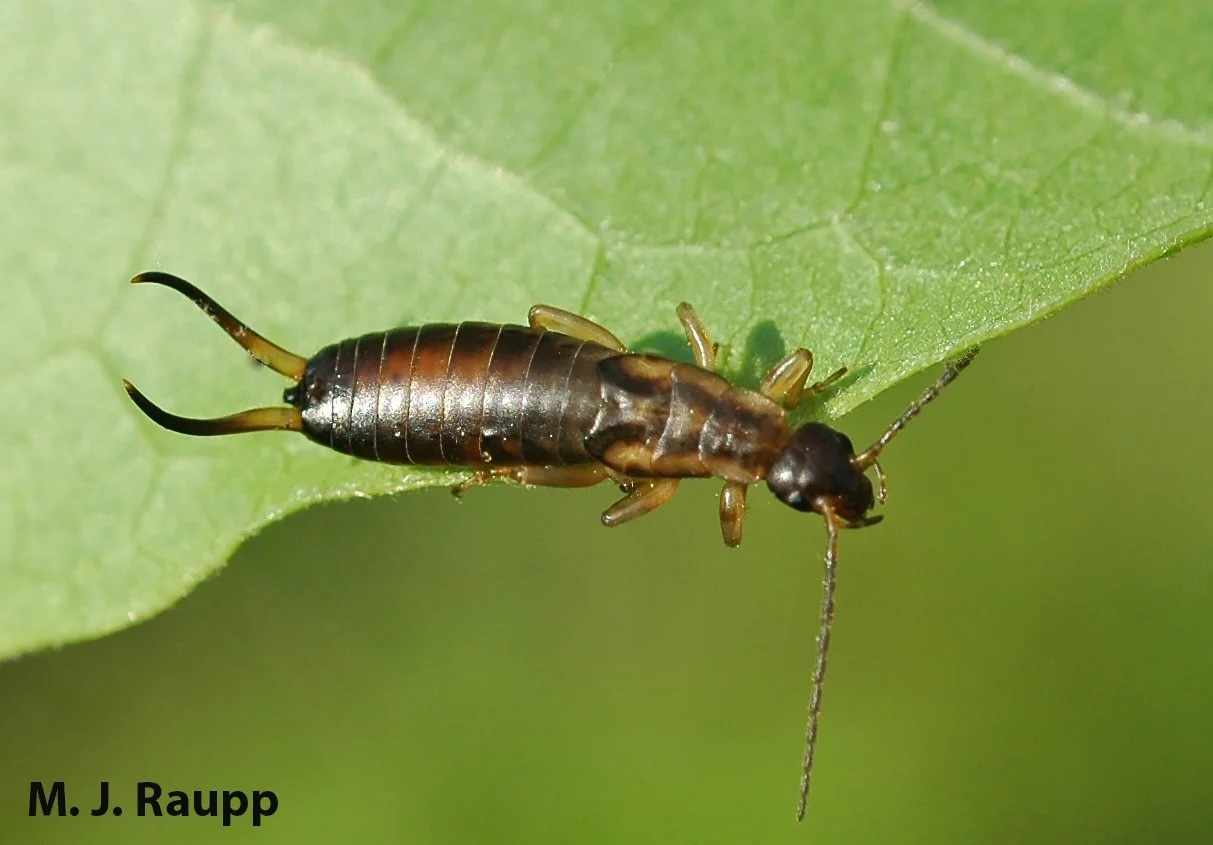
Startling pincers, zero danger — earwigs are nocturnal, moisture-loving garden insects that wander indoors after heavy rain or when harborage is abundant near foundations. The fix is environmental, not chemical.
Dark reddish-brown, 12–25 mm long, with prominent rear pincers (cerci) that curve in males and are straighter in females. Short, rarely-used wings fold beneath leathery forewings. Fast-moving and nocturnal — they hide in damp, tight crevices during the day.
🌑
Nocturnal & Moisture-Dependent
Earwigs are active at night and require high humidity to survive. During the day they congregate under stones, boards, mulch, leaf litter, and flower pots — anywhere that stays damp and dark. They enter homes seeking shelter, especially after heavy rain or irrigation.
🌱
Diet & Habits
Omnivores: primarily eat decaying plant matter, fungi, and some garden plants (dahlias, hostas, lettuce seedlings). They also eat aphids, mites, and insect eggs — providing genuine garden benefit in moderate numbers. They do not eat wood, fabric, or stored food.
⚠️
Harmless — Myths Debunked
Earwigs do not enter ears — this is a centuries-old myth with no basis. The pinch from their cerci is startling but harmless and rarely breaks skin. They transmit no diseases and cause no structural damage. They are a nuisance pest only.
📋IPM Action Steps
1
Identify the Species
Confirm European earwig (Forficula auricularia) by dark brown body, prominent rear pincers, and short leathery forewings. Distinguish from ground beetles (no pincers, harder shell) and rove beetles (exposed abdomen, no cerci).
2
Assess Moisture & Harborage Around Foundation
Walk the perimeter. Note mulch depth against foundation, leaf litter accumulation, stacked boards or firewood, flower pots, and any areas where water pools or soil stays wet. Check interior for damp basements, leaking pipes, and condensation.
3
Remove Harborage
Pull mulch back 6–12 inches from the foundation. Remove leaf litter, stacked boards, stones, and debris piled against the house. Move firewood, lumber, and compost bins away from the foundation. Elevate potted plants on risers.
4
Perimeter Exclusion
Install door sweeps on all exterior doors, especially garage and basement entries. Caulk gaps around basement windows, utility penetrations, dryer vents, and pipe entries. Seal foundation cracks with exterior-grade silicone. Check weather stripping on sliding doors.
5
Trap with Rolled Newspaper or Cardboard Tube Traps
Roll dampened newspaper loosely or use cardboard tubes with a thin coat of vegetable oil inside. Place along foundation, near garden beds, and beside entry points at dusk. Earwigs shelter inside overnight. Collect and dispose each morning — highly effective and chemical-free.
6
DE or Botanical Spray Along Foundation
Apply food-grade diatomaceous earth in a thin band along the exterior foundation line and in dry cracks at the sill plate. Use peppermint oil spray as a deterrent at entry points — door frames, window frames, and utility penetrations. Reapply after rain.
7
Evaluate & Adjust
Check newspaper traps daily for 2 weeks. Declining catch counts confirm progress. If indoor sightings continue, re-inspect for unsealed entry points and persistent moisture. Adjust exterior lighting to yellow/sodium bulbs to reduce attraction.
🛠️Prevention & Cultural Controls
💧
Foundation Moisture
Fix grading so soil slopes away from the house. Extend downspouts 4+ feet from the foundation. Reduce irrigation near the house — avoid sprinklers hitting the foundation wall. Fix dripping hose bibs and leaking basement pipes promptly.
🍃
Harborage Reduction
Pull mulch back 6–12 inches from the foundation or switch to dry gravel. Remove ground-level harborage: firewood stacks, lumber, stone piles, unused flower pots, and compost bins. Keep garden beds tidy and clear leaf litter regularly.
💡
Exterior Lighting
Replace white porch and entrance lights with yellow or sodium vapor bulbs. These wavelengths are far less attractive to earwigs and other nocturnal insects. Position security lights away from entry doors so insects gather at the light, not at the door.
⚗️Application Techniques
📰 Rolled Newspaper & Cardboard Tube Traps
Lightly dampen a section of newspaper and roll it loosely, or use an empty cardboard tube (paper towel roll).
Optionally apply a thin coat of vegetable oil inside the tube to improve retention.
Place traps along the foundation, beside garden beds, and near known entry points at dusk.
Collect traps each morning and shake into a bucket of soapy water to dispose. Replace traps nightly.
Use 6–10 traps around the perimeter for best coverage. Record catch counts to map hot spots.
💨 Diatomaceous Earth — Foundation Perimeter Band
Use a bellows duster to apply a thin, barely-visible band of food-grade DE along the exterior foundation line, 6–12 inches wide.
Also apply inside dry cracks at the sill plate, behind utility boxes, and in basement wall voids.
DE must stay dry to be effective — reapply after rain or heavy dew.
Wear a dust mask during application. Keep away from children until settled.
Never use pool-grade (calcined) DE — it is hazardous to inhale.
🌿 Botanical Perimeter Spray — Entry Point Deterrent
Apply peppermint oil spray along exterior door frames, window frames, and utility penetrations.
Spray a 6–12 inch band along the foundation line where earwigs approach the structure.
Reapply every 5–7 days outdoors, or after rain.
Shake bottle well before use. Test on a small area first for surface staining.
This is a deterrent, not a primary control — harborage removal and exclusion are the real fix.
🛒Recommended Products
📰
Rolled Newspaper / Cardboard Tube Traps
Free, non-toxic, and highly effective. Dampened newspaper or empty paper towel tubes with a thin coat of vegetable oil. Place along foundation at dusk, collect and dispose each morning. Best chemical-free monitoring and mass-capture tool for earwigs.
Trapping / Non-Toxic
⚗️
Harris Food-Grade Diatomaceous Earth
Food-grade DE with powder duster included. Apply thin band along exterior foundation and in dry interior cracks. Physically damages exoskeletons without chemical toxicity. Must stay dry to work. Effective as a long-term barrier.
Food-Grade DE / Mechanical
🌱
Mighty Mint Peppermint Oil Spray
Concentrated peppermint oil in water base. Use at exterior entry points as a deterrent. Pleasant scent, safe for families and pets once dry. Reapply weekly or after rain. Supplemental to harborage removal and exclusion.
Botanical / Repellent
💡
Yellow Bug Light Bulbs
Replace white porch lights with yellow or amber LED bulbs. These emit wavelengths far less attractive to earwigs and other night-flying insects. Reduces insect congregation at entry doors without pesticides. Available at any hardware store.
Environmental / Prevention
▶️Training Videos
📰
Trapping Technique
Earwig Newspaper Trap — Setup & Collection
Dampening, rolling, and placing newspaper traps at dusk. Morning collection into soapy water. Mapping catch data to identify hot spots.
Search: Earwig Newspaper Trap DIY Tutorial
💨
Dust Application
Diatomaceous Earth — Foundation Perimeter Band
Bellows duster technique for exterior foundation application. Thin-layer band, sill plate cracks, and reapplication after rain.
Search: Harris Diatomaceous Earth Foundation Application
🌿
Botanical Spray
Mighty Mint Peppermint Oil — Perimeter Spray Demo
Spray technique at entry points and along foundation. How essential oils deter earwigs from approaching the structure.
Search: Mighty Mint Peppermint Oil Perimeter Spray Demo
💧
Prevention
Foundation Grading & Drainage — Moisture Control
Correcting soil grade, extending downspouts, and reducing foundation moisture to eliminate earwig habitat conditions.
Search: Foundation Drainage Grading Pest Prevention
⚠️Warnings & Herbal Shield Standards
🌱
Garden-Beneficial in Moderate Numbers: Earwigs eat aphids, mites, insect eggs, and decaying organic matter. In moderate numbers they are net-positive for garden health. Treatment should focus on keeping them outside the home, not eliminating them from the property.
🌐
Environmental Fix, Not Chemical: Earwigs are an indicator of excess foundation moisture and harborage. Removing mulch, debris, and moisture from the foundation perimeter is more effective and more permanent than any spray treatment.
⚠️
Seasonal Invader After Rain: Indoor sightings spike dramatically after heavy rain. This is temporary mass migration, not an infestation. Exclusion and harborage removal prevent recurrence; a one-time spray does not.
🚫
No Synthetic Perimeter Sprays: Bifenthrin, permethrin, and similar synthetic pyrethroids are inconsistent with the Herbal Shield brand promise. They kill indiscriminately (including beneficial insects), do not address root cause, and provide only short-term suppression.
🌿
Food-Grade DE Only: Always use food-grade diatomaceous earth — never pool-grade (calcined) DE, which is hazardous to inhale. Wear a dust mask during application. Keep away from children until settled.
💬
Client Script: “These are European earwigs — the pincers look intimidating but they’re completely harmless. They can’t bite, they don’t spread disease, and they definitely don’t go in ears — that’s an old myth. They’re coming inside because the foundation perimeter has the damp, sheltered conditions they need. Once we reduce the moisture and harborage around the outside and seal the entry points, they’ll stay in the garden where they actually do some good eating aphids.”
💬
Client Script — Why We Don’t Spray: “The reason we focus on the environment instead of spraying is that earwigs are coming in because conditions outside are inviting them — damp mulch against the foundation, leaf litter, stacked wood. If we spray and kill the ones inside today, more come in tomorrow because nothing changed outside. When we pull mulch back, clear debris, seal the gaps, and reduce moisture, the environment no longer draws them in. That’s a lasting fix, and it keeps the beneficial ones in your garden where they eat aphids and break down organic matter.”