← Norway Rats 🖨 Care Card Head Lice →

Field Guide · Herbal Shield

Fleas
Ctenocephalides felis

Cat fleas infest pets and homes year-round but peak in late summer. Effective flea control requires simultaneous treatment of the pet, the indoor environment, and outdoor resting areas. A single missed step prolongs the infestation by weeks.

Botanical Spray Food-Grade DE Pet Treatment Vacuum Protocol
🔍Identification & Behavior
🦟
Cat Flea (Ctenocephalides felis)
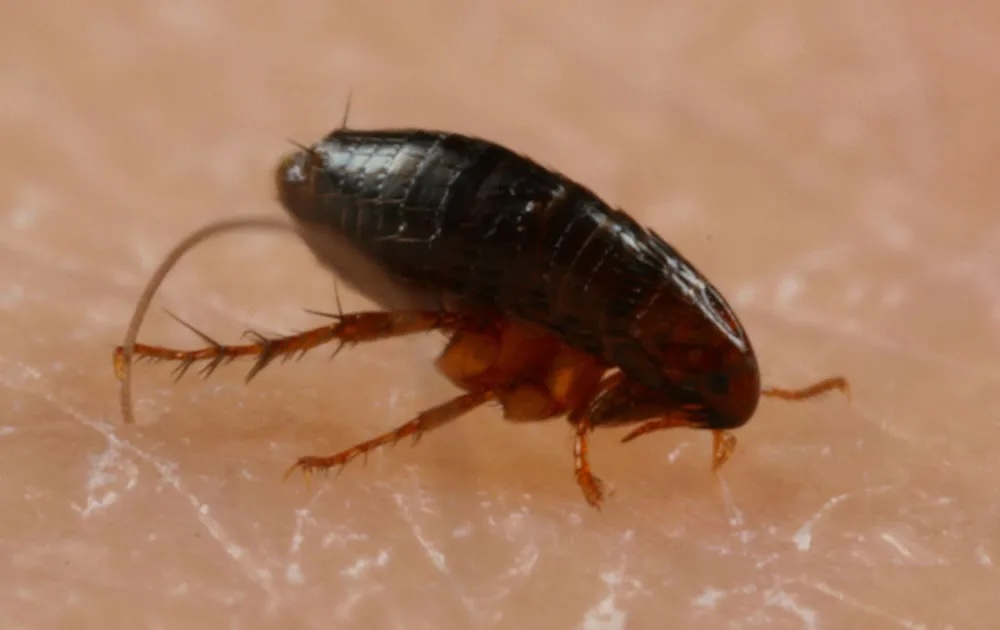
The dominant species in U.S. homes — found on cats, dogs, and humans. Adults are 1–3mm, laterally compressed (thin side-to-side), dark brown, wingless. They jump up to 7 inches vertically. Females begin laying 20–50 eggs per day within 48 hours of first blood meal. Eggs fall off the pet into carpets, bedding, and crevices.
🥚
Life Cycle — The Hidden Problem
Adults on the pet are only 5% of the total flea population. The other 95% (eggs, larvae, pupae) are in the environment — in carpet fibers, under furniture, in floor cracks. Larvae are killed by most treatments; pupae are not. Pupae remain dormant in cocoons for up to 6 months and are vibration-triggered to emerge, explaining the "treatment failed" effect when adults appear weeks later.
🔎
Signs of Infestation
Pet scratching excessively, particularly at base of tail and neck. Flea dirt (digested blood) — dark specks that turn red when wet. Adult fleas jumping on white socks or light-colored fabric when walking across carpet. Small, red, itchy bites on human ankles. Check pet sleeping areas and the base of furniture legs first.
🚨
Health Concerns
Fleas transmit tapeworm to pets (when ingested while grooming). In rare cases they transmit Bartonella (cat scratch disease) and murine typhus to humans. Severe infestations cause anemia in kittens and small dogs. Flea allergy dermatitis (FAD) is the most common skin condition in cats and dogs — a single bite triggers intense allergic reaction in sensitized animals.
📋IPM Action Steps
1
Confirm Fleas — White Sock Test
Have the client walk slowly through carpeted areas in white socks. Adult fleas will jump onto the socks and be visible. Place a white plate with a damp paper towel under a lamp overnight — fleas jump toward heat and light. Finding "flea dirt" (pepper-like specks that smear red when wet) on the pet confirms active infestation.
2
Coordinate Pet Treatment Before Service Visit
Environmental treatment without simultaneous pet treatment always fails. Instruct client to treat ALL pets with a veterinarian-approved topical or oral flea product the same day as the home treatment. Bathing the pet with dawn soap before topical application removes flea dirt but do not bathe within 48 hours after applying topical.
3
Thorough Vacuuming Before Any Product Application
Vacuum all carpets, rugs, upholstered furniture, floor crevices, and along baseboards. Use a crevice tool on seams and corners. Vacuuming removes 30–60% of flea eggs and stimulates pupae to hatch (making them vulnerable to treatment). Immediately seal and discard the vacuum bag or empty canister outside. Repeat daily for 2 weeks during treatment.
4
Launder All Pet Bedding and Linens
Hot wash (130°F+) and dry all pet bedding, blankets, throw rugs, and any soft furnishings the pet contacts. Heat kills all life stages. If a pet bed cannot be laundered, discard it. Replace with a washable cover that can be laundered weekly during treatment.
5
Apply Food-Grade DE to Carpet and Rest Areas
Dust a thin layer of food-grade diatomaceous earth into carpet fibers using a DE duster or brush. Focus on pet sleeping areas, along baseboards, under furniture, and in floor crevices. DE penetrates the flea's exoskeleton and causes fatal dehydration. Leave in carpet for 24–48 hours, then vacuum thoroughly. Reapply after vacuuming sessions.
6
Botanical Spray Treatment — Full Room
Apply cedar oil or peppermint-based botanical spray to all carpet surfaces, upholstered furniture, baseboards, under beds, and in pet resting areas. Hold spray 12–18 inches from surface for even coverage. Allow to fully dry before allowing pets and people back into treated areas. Treat all carpeted rooms simultaneously — fleas will migrate to untreated areas.
7
Address Outdoor Resting Areas
Fleas spend time in shaded, moist soil and leaf litter in areas where pets rest. Treat dog houses, kennels, patio furniture, under decks, and shaded garden borders with food-grade DE dust. Remove leaf litter and trim tall grass — fleas avoid sunny, dry areas. Outdoor treatment is critical to prevent re-introduction.
8
2-Week Re-Treatment & Monitoring
New adults will continue emerging from pupae for 2–6 weeks regardless of treatment — this is normal. Inform the client to expect ongoing flea activity for up to 3 weeks. Schedule a follow-up treatment at 10–14 days. Vacuum daily during this period. Treatment is complete when no new fleas are detected for 2 consecutive weeks.
🛠️Prevention & Cultural Controls
🐾
Year-Round Pet Prevention
Vet-approved flea prevention for all pets is the single most important factor — oral or topical treatments break the flea life cycle before it reaches the home environment. Monthly treatments applied consistently eliminate 95%+ of infestation risk. No flea treatment is fully effective without it.
🧹
Vacuuming & Laundry
Vacuum all carpets, upholstery, and pet resting areas weekly — and dispose of the bag immediately outside. Wash pet bedding weekly in hot water. Vacuuming physically removes eggs, larvae, and adults and stimulates pupae to hatch, accelerating treatment efficacy.
🌿
Outdoor Habitat Reduction
Treat shaded outdoor areas where pets rest — fleas cannot survive in direct sun. Keep grass mowed short. Remove debris piles, wood stacks, and leaf litter near the home — these provide cool, humid microhabitats for flea development. Wildlife intrusion (raccoons, feral cats) can reintroduce fleas.
⚗️Application Techniques
🌿 Botanical Spray — Cedar Oil & Peppermint Application
  1. Remove or cover fish tanks — cedar oil and botanical sprays are toxic to aquatic life.
  2. Apply with a pump sprayer at medium-fine mist setting. Hold 12–18 inches from carpet surface. Work room-to-room from back to front so you're not walking on treated carpet.
  3. Treat carpet, baseboards, upholstered furniture undersides, under beds, in closets where pets rest.
  4. Allow minimum 4 hours drying time before re-entry. Open windows to ventilate.
  5. Do not vacuum treated areas for 24–48 hours to allow product to contact flea stages in carpet fibers.
🌾 Diatomaceous Earth — Carpet & Crevice Application
  1. Use food-grade DE only (not pool-grade, which has sharp crystalline silica and is a respiratory hazard).
  2. Apply a thin, barely visible layer using a DE duster, powder bulb, or paintbrush worked into carpet fibers. Over-application wastes product and is no more effective.
  3. Target pet sleeping areas, carpet perimeters, floor cracks, under furniture. Keep out of food preparation areas.
  4. Wear an N95 mask during application — any fine particulate should not be inhaled, even food-grade.
  5. Leave in place 24–48 hours minimum then vacuum. Reapply after each vacuuming session for first 2 weeks.
⚠️
Pupa Resistance Expectation: Inform clients upfront that flea pupae are not killed by any environmental product — only emerge-and-contact kills them. This means adult fleas will continue appearing for up to 3 weeks after treatment. This is not treatment failure. Continued vacuuming and pet treatment are essential during this window.
🛒Recommended Products
🌾
Harris Food-Grade Diatomaceous Earth
100% freshwater DE with powder duster included. Labeled for fleas on carpets, pet bedding areas, and yard. OMRI listed — safe for use around children and pets when dry.
OMRI Listed
🌿
Mighty Mint Peppermint Oil Spray
High-strength peppermint oil concentrate. Effective contact kill for adult fleas with residual repellent action. Safe for carpets, upholstery, and pet bedding when dry. Pleasant scent minimizes client concern.
Botanical
🌲
Cedarcide Original (Cedar Oil)
Food-grade cedar oil spray for indoor and outdoor use. Kills fleas on contact across all life stages. Can be used as a pet body spray (avoid eyes/face) and on yard areas. Pleasant cedar scent.
Pet-Safe Dry
🔌
Dyson V-Series HEPA Vacuum
HEPA filtration captures flea eggs and larvae. Frequent vacuuming is the single most effective mechanical flea control. Daily use during treatment is critical. Recommend client upgrade to HEPA if using a standard vacuum.
Mechanical Control
▶️Training Videos
🦟
Identification
How to Identify Flea Infestations — White Sock & Flea Dirt Tests
Demonstrates the white sock walking test, flea dirt wet test, and how to distinguish flea bites from other insect bites on pets and humans.
Search: "identify flea infestation home" on YouTube
🌾
Treatment
Diatomaceous Earth Flea Treatment — Indoor Carpet Application
Step-by-step application of food-grade DE to carpet, baseboards, and pet sleeping areas. Includes safety precautions and timing guidance.
Search: "diatomaceous earth flea carpet treatment" on YouTube
🌿
The Flea Life Cycle
Understanding Why Flea Treatment Takes 3 Weeks
Explains the egg-larva-pupa-adult cycle and why pupae survive environmental treatments. Use this to set client expectations correctly and prevent complaints.
Search: "flea life cycle treatment expectations" on YouTube
🏡
Outdoor Treatment
Treating Yards & Outdoor Pet Areas for Fleas
Covers DE application in shaded soil, treating dog runs, removing leaf litter harborage, and using cedar oil on outdoor furniture and kennels.
Search: "flea yard treatment cedar oil DE" on YouTube
⚠️Warnings & Herbal Shield Standards
🐟
Fish Tank Protocol: Cover or seal all fish tanks and turn off tank pumps before applying any botanical spray or DE. Cedar oil and most botanical products are acutely toxic to fish. Remove or seal tanks before starting treatment — do not uncover for at least 2 hours after treatment and ensure room is fully ventilated.
🐈
No Essential Oils Directly on Cats: Cats cannot metabolize many essential oils including peppermint, tea tree, and eucalyptus. Never apply botanical sprays directly to cats. Cedar oil (Cedarcide) is the exception — it is labeled safe for cats when used as directed. When in doubt, use only veterinarian-approved products on feline clients.
📢
Client Script — Setting Expectations: "Flea treatment takes 2–3 weeks because the pupae in the carpet cannot be killed by any spray — they have to hatch and then contact the product. You will continue to see adult fleas for up to 3 weeks. This is normal and expected. Keep vacuuming daily and keep your pet on their flea prevention — that is what will end the infestation."
📋
PPE Required: N95 mask during DE application (fine particulate). Nitrile gloves during botanical spray application. Change clothes after treating heavily infested areas to avoid carrying flea eggs home on clothing.