← Cockroaches 🖨 Care Card Norway Rats →

Field Guide · Herbal Shield

House Mice
Mus musculus

Mice require a seal-first, trap-second approach. No rodenticides — ever. Exclusion is the only permanent solution, and every entry point must be sealed before trapping begins.

Exclusion FirstSnap TrapsLive CatchNo Rodenticides
🔍Identification & Behavior
Mouse
Physical Description
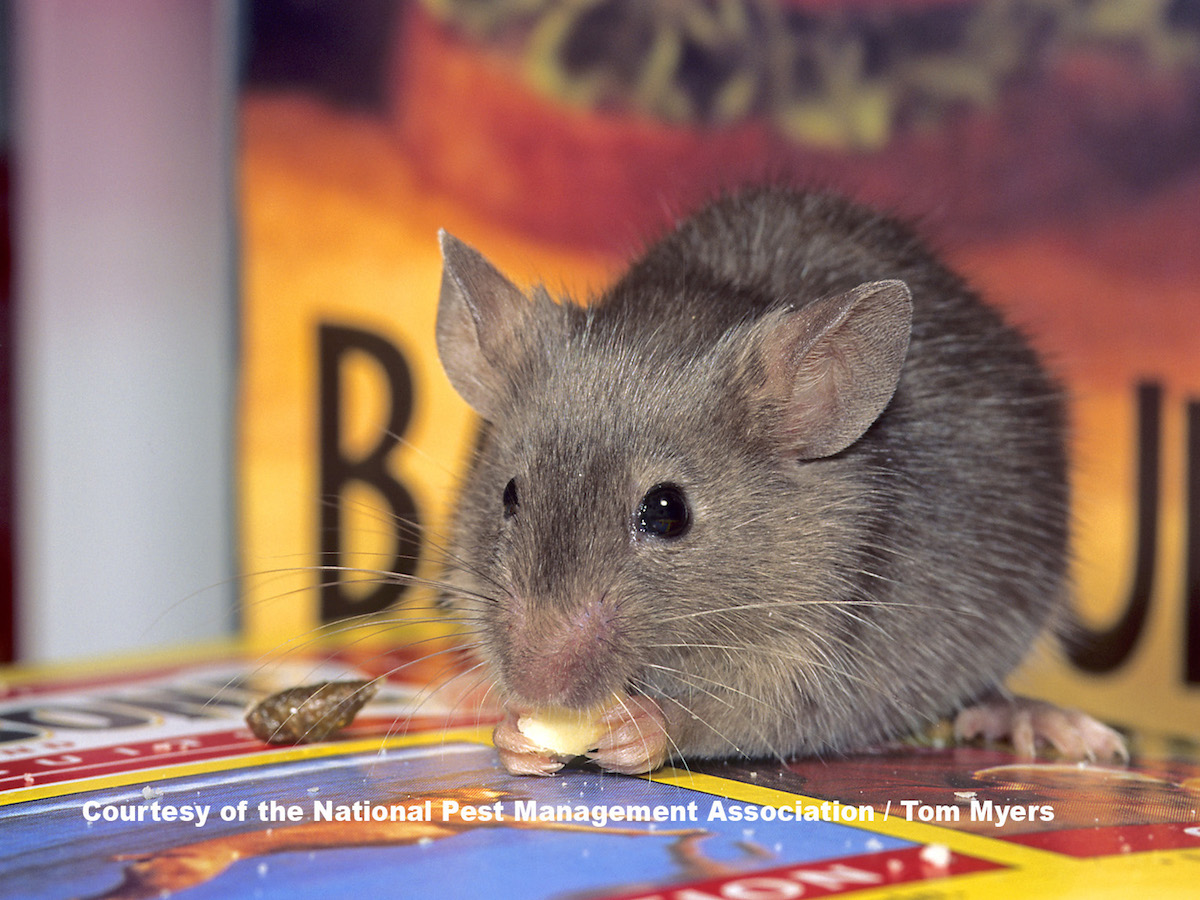
Small rodents, 65–95mm body length. Light grey to brown with lighter undersides. Large ears relative to body size. Can fit through a gap the size of a dime (6mm). Excellent climbers — can scale rough vertical surfaces and run along pipes and wires.
🏠
Nesting Behavior
Nest within 10–30 feet of food sources. Build nests from shredded paper, insulation, fabric, and plant material in wall voids, behind appliances, inside drop ceilings, and in stored boxes. Primarily nocturnal but will forage during daylight in heavy pressure situations.
🔎
Signs of Activity
Dark, rod-shaped droppings (3–6mm) along walls, in cabinets, and near food storage. Gnaw marks on food packaging, wood, and wiring insulation. Grease smear marks along habitual travel paths. Rustling or scratching sounds in walls at night. Distinctive musky odor in active areas.
🦠
Health Risks
Mice contaminate surfaces with urine, droppings, and fur containing Hantavirus, Salmonella, and Leptospirosis. Never sweep or vacuum dry droppings — always wet with disinfectant first to prevent airborne particles. Wear gloves and a mask during all cleanup.
📋IPM Action Steps
1
Confirm & Map Activity
Sprinkle flour lightly along suspected travel paths (baseboards, behind appliances, under sinks). Check after 24 hours for footprints. Count and photograph droppings before disturbing them — this maps the active runs used for trap placement.
2
Seal All Entry Points First
A 6mm gap (dime size) is enough for a mouse. Systematically inspect and seal: around all pipe penetrations, behind dryers and dishwashers, inside cabinet kick plates, garage door seals, foundation cracks, and utility chases. Seal before trapping — new mice will replace trapped ones if entries remain open.
3
Remove All Food & Harborage
Transfer all pantry goods to hard-sided airtight containers. Pet food in sealed bins — never leave food out overnight. Remove indoor cardboard boxes and clutter. Elevate outdoor firewood 12+ inches off the ground and away from the structure.
4
Place Snap Traps on Active Runs
Place traps perpendicular to walls along mapped travel paths — mice run along edges, not across open areas. Use 2–3 traps per active run location, 12–18 inches apart. Bait with a hazelnut-sized amount of peanut butter, hazelnut spread, or oat-peanut butter mixture. Check daily — remove carcasses promptly using gloves.
5
Live Traps (If Client Prefers)
Use Havahart-style live traps for clients who prefer non-lethal removal. Check every 4–6 hours — mice in unventilated traps can die of stress quickly. Release at least 1 mile away in a wooded area with food sources. Wear gloves during all handling.
6
Biological Aids
Outdoor cats, owl boxes, and snake habitat on larger properties provide supplemental control. Not a primary tool, but a meaningful long-term deterrent on rural or semi-rural properties. Mention to clients with the appropriate setting as a passive prevention layer.
7
Seasonal Monitoring
Increase inspections in late September through November — mice move indoors as temperatures drop. Inspect and seal before cold weather arrives. Leave snap traps in historically active areas year-round in homes with recurring seasonal pressure.
🛠️Prevention & Cultural Controls
🔒
Exclusion First
A mouse can enter through any gap larger than ¼ inch. Seal all penetrations with steel wool packed tight, then covered with hydraulic cement or metal mesh — never foam alone. Focus on where utilities enter, foundation gaps, weep holes, and any gap where two materials meet.
🥫
Food & Harborage Removal
Store all food including pet food in hard-sided metal or thick plastic containers. Eliminate cardboard boxes, paper clutter, and insulation debris in attics and basements — prime nesting material. Move stacked firewood, debris piles, and dense shrubs at least 20 feet from the foundation.
🔍
Monitoring & Early Detection
Place snap traps along walls at known activity points even between visits — early detection prevents colony establishment. Check traps every 48 hours. Fresh droppings, gnaw marks, or nesting material are early warning signs. Inspect the attic and crawl space at every visit regardless of client complaint.
🛠️Exclusion Material Guide
🔩
Hardware Cloth
1/4-inch galvanized hardware cloth for covering vents, crawlspace openings, and larger structural gaps. Mice can squeeze through any opening larger than 1/4 inch — use 1/4-inch mesh, not the 1/2-inch used for rats. Secure with masonry screws every 4 inches. Avoid chicken wire — mice chew through it.
🔒
Steel Wool + Xcluder
Pack steel wool firmly into small gaps and pipe penetrations, then seal over with hydraulic cement or exterior silicone. Xcluder fill fabric (stainless steel and polymer mesh) can be used for mid-size gaps. Never use foam sealant alone — mice chew through it within hours.
🏗️
Hydraulic Cement & Caulk
Hydraulic cement for masonry gaps and foundation cracks — it expands as it cures and is rodent-resistant. Exterior-grade silicone caulk for gaps around door frames, window frames, and utility penetrations through wood or siding. Inspect and refresh caulk annually — it dries and shrinks over time.
⚗️Application Techniques
🪤 Snap Trap Placement — The Most Effective Non-Toxic Tool
  1. Place traps perpendicular to the wall, with the trigger end touching the baseboard. Mice run along walls and step directly onto the trigger.
  2. Use 2–3 traps clustered at each active location — mice are trap-shy after a near-miss, so multiple traps improve catch rate.
  3. Bait with a hazelnut-sized amount of peanut butter mixed with oats, or Nutella. Secure bait so the mouse must fully engage the trigger.
  4. Wear gloves when setting and checking traps. Check every 24 hours — unchecked traps with carcasses reduce effectiveness as mice detect the scent.
  5. Remove carcasses wearing gloves, double-bag in plastic, and dispose in outdoor trash.
  6. If no captures after 3–4 days, move trap locations — the mapped run may have shifted.
🔒 Exclusion — The Only Permanent Solution
  1. Use copper mesh (Xcluder or similar) for gaps up to 1 inch — stuff firmly into the gap, then cover with silicone caulk or expanding foam.
  2. Use hardware cloth (1/4 inch mesh) for larger openings — foundation vents, crawl space openings, attic vents. Secure with screws, not staples.
  3. Install quality door sweeps on all exterior doors — rubber or brush sweeps that contact the threshold fully.
  4. Check all pipe penetrations (plumbing, HVAC, electrical) — these are the most commonly overlooked entry points.
  5. Never use standard steel wool alone — it rusts and compresses within months. Always combine with caulk or use Xcluder mesh.
🧹 Safe Dropping Cleanup — Health Protocol
  1. Wear gloves and an N95 mask before any cleanup. Open windows to ventilate the area for 30 minutes before starting.
  2. Spray droppings with a 1:10 bleach solution or commercial disinfectant and let soak for 5 minutes. Never dry-sweep or vacuum dry droppings.
  3. Wipe up with paper towels and double-bag. Wash hands thoroughly with soap and water after removal of gloves.
  4. Disinfect any surfaces that may have been contaminated with urine or droppings.
🛒Recommended Products
🪤
Tomcat Snap Traps
Easy-set, no-touch disposal snap traps. High sensitivity trigger for clean, quick kills. Place perpendicular to walls on active runs. Use 2–3 per location. Most effective and humane mechanical option for active infestations.
Mechanical / No Poison
🌿
Havahart Live Traps
Catch-and-release wire cage traps for clients who prefer non-lethal removal. Check every 4–6 hours. Release at least 1 mile from the property in wooded habitat. Ideal for clients with strong animal welfare values — lead with this option proactively.
Live Catch / Non-Lethal
🔒
Xcluder Rodent Exclusion Fill Fabric
Stainless steel and polymer mesh — rust-resistant, compression-resistant, and chew-proof. Stuff into gaps and pipe penetrations, secure with caulk over the top. The most effective long-term exclusion material available. Available in rolls and pre-cut pads.
Exclusion / Physical Barrier
Victor Electronic Mouse Traps
High-voltage shock kill — instant, no-poison, no-touch disposal. Battery powered. Green light indicator for successful catch. Premium option for clients who want a clean, poison-free alternative to snap traps. More expensive but very effective for sustained pressure.
Electronic / No Poison
▶️Training Videos
🪤
Snap Traps
Tomcat Mouse Snap Trap — Setup & Placement Tutorial
Baiting with peanut butter, perpendicular wall placement, setting the trigger, checking daily, and no-touch disposal technique.
Search: Tomcat Mouse Snap Trap Setup Tutorial
🌿
Live Traps
Havahart Live Mouse Trap — Setup & Safe Release
Baiting, placement, checking frequency, safe handling with gloves, and humane release at least 1 mile from the property.
Search: Havahart Mouse Live Trap Tutorial
🔒
Exclusion
Rodent Exclusion — Sealing Entry Points with Xcluder
Finding and sealing all entry points with copper mesh, hardware cloth, and door sweeps. Visual guide to the most commonly missed entry points.
Search: Xcluder Rodent Exclusion DIY Video
🏃
Run Mapping
Proper Snap Trap Placement — Following Mouse Runs
Using flour to map active runs, reading grease smears on walls, and understanding mouse movement patterns for optimal trap placement.
Search: Proper Snap Trap Placement Mice
⚠️Warnings & Herbal Shield Standards
🚫
No Rodenticides — Ever: Anticoagulant rodenticides (e.g., bromadiolone, brodifacoum) are not part of Herbal Shield's program. They accumulate in the food chain and can poison predatory birds and wildlife that eat poisoned mice. Exclusion and trapping provide a permanent, wildlife-safe solution.
🚫
No Glue Traps: Glue traps cause slow, painful death and are inconsistent with Herbal Shield's values. If a client uses them, discuss transitioning to snap or electronic traps as a more humane and often more effective alternative.
🦠
Biohazard Cleanup: Always use gloves and a mask when handling traps, carcasses, or droppings. Wet droppings with disinfectant before wiping — never dry-sweep. Hantavirus is rare but real, and the proper protocol is non-negotiable.
💬
Client Script: "Our approach for mice is exclusion first — we find and seal every entry point so new mice can't get in, then we remove the ones already inside with snap traps. No poison, no risk to your children, pets, or the wildlife around your home."