← Carpenter Bees 🖨 Care Card Common Spiders →
Field Guide · Pantry Moths

Pantry Moths
Plodia interpunctella

Maryland's most common stored-food pest. Larvae silently infest grains, flour, nuts, dried fruit, spices, pet food, and bird seed — leaving fine webbing, frass, and clumped food as evidence. Treatment is entirely non-chemical: deep pantry excavation, airtight storage, and pheromone monitoring. No pesticide sprays are ever appropriate in food-storage areas.

Stored Food Pest No Sprays in Pantry Source Elimination First Pheromone Traps Key
🔍Identification & Behavior
🦋
Adult — Indian Meal Moth
Adults are small moths, about 3/8 inch (9mm) long with a 5/8 inch (16mm) wingspan. The inner half of the forewing is pale gray or tan; the outer half is distinctively rusty-brown or coppery-bronze — this two-tone pattern is the signature diagnostic feature. Weak, erratic fliers, most active at dusk and drawn to light sources. Adults do not feed and live only 1–2 weeks, but a single female lays 100–400 eggs.
🐛
Larva — The Damaging Stage
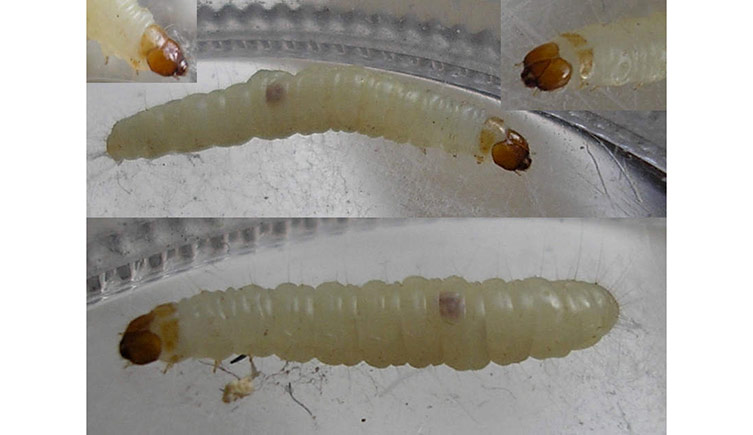
Larvae are ½ inch cream-colored caterpillars with a brown head capsule. They spin fine silk webbing as they feed, creating characteristic clumps and threads throughout infested food. Larvae can chew through thin plastic bags, cardboard, and foil-lined packaging. They are photophobic — they hide deep in food packages and in cracks and crevices of shelves. The larval stage lasts 2–8 weeks depending on temperature.
🕐
Life Cycle — 27 to 305 Days
Eggs hatch in 2–14 days. Larvae feed for 2–8 weeks, then spin a silken cocoon to pupate — often in a corner, crack, or crevice well away from the food source. Adults emerge in 15–30 days. In warm Maryland homes (70–80°F), populations cycle every 4–6 weeks. Infestations can persist for months unnoticed. Multiple overlapping generations are common year-round in heated spaces.
🏠
How Infestations Begin
Most infestations begin at the grocery store — eggs or young larvae are already present in packaging when purchased, invisible to the naked eye. Bird seed, bulk grains, and imported spices are the highest-risk entry vectors. Once one product is infested, larvae migrate to neighboring packages. Pupae are often found in wall cracks, cabinet hinges, and corners well away from the original food source.
🍞What They Infest — Priority Inspection List
🌾
Grains & Flours
All-purpose flour, whole wheat flour, cornmeal, oats, rice, quinoa, barley, bulgur, bread crumbs, and dry pasta. These are the most commonly infested products — inspect any bag or box that has been open for more than a few weeks.
🥜
Nuts, Seeds & Dried Fruit
Walnuts, almonds, pecans, sunflower seeds, pumpkin seeds, raisins, dates, figs, apricots, and coconut flakes. High-fat nuts are especially attractive. Bird seed stored in the pantry or garage is a frequently overlooked reservoir.
🌶️
Spices & Herbs
Paprika, chili powder, cayenne, cumin, dried bay leaves, and other powdered or whole spices. Many clients are shocked to find moth activity in the spice cabinet — infestations can persist unnoticed in rarely-used spices for months.
🐾
Pet Food & Bird Seed
Dry dog food, cat kibble, bird seed, and rabbit pellets are among the most overlooked infestation sources. Bags in garages or utility areas not inspected regularly can harbour large populations and serve as a continuous re-infestation source for the kitchen.
🍫
Baking Supplies & Sweets
Chocolate chips, baking mixes, powdered milk, dried beans, protein powder, granola, and trail mix. Partially-used bags that are not resealed are especially vulnerable. Even chocolate and candy bars in warm pantries have been infested.
🍵
Teas, Herbs & Supplements
Loose-leaf teas, herbal teas in paper packaging, dried chamomile, dried lavender sachets, and some supplement powders. Often overlooked during inspections — check top shelves and backs of cabinets where these are stored long-term.
🔦IPM Inspection Protocol
1
Check All Food Packaging for Evidence
Look for fine silk webbing inside and around packages, small clumps or threads in flour or grains, small holes in cardboard boxes, and sticky residue from larval secretions. Open any suspect package and inspect contents directly. Larvae are photophobic and will wriggle away from light. Even factory-sealed products can be infested if stored near an active source.
2
Inspect Shelves, Corners & Cabinet Hinges
Larvae migrate from food to pupate in cracks, crevices, and hidden corners — behind contact paper, under shelf liners, inside cabinet hinges, and inside rolled cardboard box edges. Use a flashlight and look for silken cocoons, which look like tiny cotton tufts or stuck-down debris.
3
Expand Beyond the Pantry
Check all food storage areas: above the refrigerator, under the sink, in the garage (especially pet food and bird seed), in the basement (emergency rations), and anywhere dry goods may be stored. Moths fly freely and infestations spread throughout the home from a single overlooked source.
4
Locate Adult Activity
Adult moths rest on walls and ceilings near the pantry, especially at night — attracted to light. Look for adults resting in corners, on the ceiling above the refrigerator, and near windows. Where adults concentrate indicates proximity to the infestation source or to pupation sites.
5
Assess & Date All Food Items
Old, forgotten food — especially baking supplies, bulk grains, and spices purchased months or years ago — are frequently the original infestation source. Ask the client when each item was purchased and whether they've seen moths before. A multi-year-old bag of quinoa buried at the back of a cabinet is a common culprit in Maryland homes.
🌿Non-Chemical Treatment (The Herbal Shield Approach)
ℹ️
Pantry moth control is one of the clearest examples of why IPM works and why pesticide sprays don't. No spray should ever be applied to food-storage areas. The entire treatment protocol is mechanical, behavioral, and monitoring-based — and it works completely when done thoroughly.
1
Remove & Discard All Infested Food
Bag all infested and suspect food in a sealed trash bag and immediately remove it from the home — not just to the kitchen trash can, which allows re-emergence. When in doubt, throw it out. Even food with no visible evidence may contain microscopic eggs. Frozen food is safe. Canned goods are safe. Everything else in an active infestation is suspect.
2
Temperature Treatment for High-Value Food
For items the client doesn't want to discard (whole spices, expensive nuts), recommend the freeze method: seal in a zip-lock bag and freeze at 0°F for at least 4 days. This kills all life stages. Alternatively, heat in the oven at 140°F for 30 minutes. Especially useful for bird seed and bulk grains.
3
Deep Clean All Shelves & Surfaces
Wipe all shelves, walls, and corners with hot water and dish soap. Pay particular attention to shelf corners, cabinet hinges, the undersides of shelves, and any cracks or crevices where larvae pupate. A vacuum with a crevice tool is essential — vacuum all corners, cracks, and the backs of shelves before wiping. Dispose of the vacuum bag immediately.
4
Seal Cracks & Crevices
After cleaning, seal any visible cracks, gaps around shelf brackets, or openings in cabinet walls with food-safe caulk. This eliminates pupation sites and makes future cleaning easier. Particularly important in older Maryland homes with wooden cabinets that have settled gaps.
5
Transfer All Food to Airtight Containers
The single most effective long-term prevention measure. Glass mason jars with rubber-gasket lids or high-quality hard plastic containers with snap-lock lids are the gold standard. Screw-top glass jars are not reliable — moths can penetrate them. This applies to pet food and bird seed as well. A good storage protocol prevents 95% of future infestations.
6
Deploy Pheromone Monitoring Traps
Place Indian meal moth pheromone sticky traps (1 per pantry, 1 near pet food) to capture remaining adults and monitor for re-infestation. These traps contain a synthetic female sex pheromone that attracts males — they confirm activity, track progress, and provide early warning. Replace traps every 3 months. An increasing trap count after a cleanout indicates an overlooked source or new introduction.
🧴Herbal Shield Product Protocol
🚫
No pesticide sprays are used in food storage areas — ever. Our pantry moth protocol is entirely mechanical and monitoring-based. The following products support treatment without introducing chemical risk around food.
🫙
Indian Meal Moth Pheromone Trap
Monitoring Trap · Non-Pesticide
1 trap per food-storage area (pantry, cabinet, garage/utility). Replace every 3 months. Seeing moths in the trap is good news — the trap is working. More moths in week 1 than week 4 means the population is declining. A rising count after cleanout means an overlooked source remains.
❄️
Freeze Treatment Protocol
Temperature Control · Non-Chemical
Seal item in a freezer bag and place at 0°F for a minimum of 4 days (7 days for thick items). Kills all life stages including eggs. Best for whole spices, nuts, specialty grains, bird seed, and any high-value dry goods the client doesn't want to discard. After freezing, transfer to airtight glass container.
🫙
Glass Mason Jars (Ball / Kerr / Anchor Hocking)
Storage Solution · Recommended to All Clients
Rubber-gasket lids provide a true airtight seal — the gold standard for pantry storage. Screw-top jars are not sufficient. Recommend to every client as the permanent prevention measure. Also appropriate: OXO Good Grips and Rubbermaid Brilliance hard-plastic containers with snap-lock lids.
🌿
Dried Bay Leaves & Cedar Deterrents
25(b) Botanical Deterrent · Preventive Only
Place 1–2 dried bay leaves inside each airtight container or on each pantry shelf. Bay contains eucalyptol and other volatile compounds that deter moths from settling. Not a treatment for active infestations — a deterrent for prevention only. Replace every 3 months as volatile oils dissipate. Cedar chips or blocks provide similar deterrent effect.
🚫What Not to Do — Protecting Food Safety
⚠️
Never spray pesticides in food storage areas. Pyrethrin sprays, pyrethroids, organophosphates, and even "natural" essential-oil sprays are not appropriate for direct application in pantries, cabinets, or any food-contact area. These chemicals can contaminate food, leave residues on shelving, and expose family members — especially children — to unnecessary chemical risk. Pesticide sprays also do not address the source: removing and discarding infested food is always more effective.
⚠️
Never use mothballs for pantry moths. Paradichlorobenzene and naphthalene mothballs are acutely toxic, carcinogenic with chronic exposure, and explicitly not labeled for use around food. They do not work for Indian meal moths anyway — these are a clothes moth product. Never recommend mothballs for pantry use under any circumstances.
💡
Setting Client Expectations
Be honest: a single treatment rarely achieves complete resolution. Pupae that migrated to crevices before the cleanout will emerge as adults 2–4 weeks later. Clients should expect to see occasional adults for 4–6 weeks after a thorough cleanout — this is normal. Pheromone traps allow them to monitor progress objectively. A declining trap count is the best confirmation that the population is collapsing.
🔄
Common Re-Infestation Causes
The three most common reasons pantry moths return: (1) An overlooked infested source — often in a rarely-used cabinet, the garage, or the basement. (2) Continued purchase of the same high-risk product (bird seed, bulk grains) without freezing it first. (3) Not transitioning to airtight containers — moth eggs on the outside of new packaging can hatch on the shelf. Address all three with the client at every visit.
💬Client Education Scripts
🎤
"Where Did These Come From?"
"Pantry moths almost always come in on a product you purchased at the grocery store — usually something like bird seed, flour, or bulk grains. The eggs are invisible and the larvae hatch once the food is in your warm pantry. It has nothing to do with cleanliness. Once they're in, they spread from package to package, which is why you're seeing them everywhere now."
🎤
"Why Can't You Just Spray?"
"We never spray pesticides in food areas — ever. The spray doesn't solve the problem anyway because the moths are living inside your food, not on the shelf surface. The only thing that works is removing and discarding the infested food, cleaning thoroughly, and storing everything in sealed containers going forward. That's actually the most effective treatment there is."
🎤
"I Still See Moths After the Cleanout"
"That's completely normal for the first 4–6 weeks. Some of the larvae had already left the food and pupated in cracks and corners before we did the cleanout. Those will emerge as adults. As long as the trap numbers are going down week by week, the population is collapsing. Once the trap stays empty for two weeks in a row, you're clear."
🎤
Ongoing Prevention
"Three things going forward: First, freeze all new bird seed, bulk grains, and nuts for a week before putting them in the pantry — this kills any eggs from the store. Second, transfer everything to glass jars with rubber-gasket lids. Third, keep your pheromone trap in there — it'll catch any stragglers and warn you early if a new product brings something in."
🗺️Maryland Context & Seasonality
📅
Year-Round Pest in Maryland Homes
Unlike outdoor insects, Indian meal moths thrive year-round in the temperature-controlled environments of Maryland homes and apartments. Population cycles accelerate in summer (70–80°F pantries) and slow in winter, but infestations never fully cease in heated spaces. Spring is when clients most often first notice adults — populations built through winter become visible.
🐦
Bird Feeding — A Major Risk Factor
Maryland's large bird-feeding culture (especially in Carroll, Howard, Frederick, and Baltimore Counties) means bird seed is a very common entry vector. Many clients store 25–50 lb bags in garages adjacent to kitchens. Recommend: freeze all new seed before storage, store in a sealed metal or hard plastic bin, never bring large quantities of seed inside the kitchen.
🌿
Farmers Market & Bulk Food Culture
Maryland's strong farmers market, co-op, and organic food culture means many clients regularly purchase bulk grains, artisan flours, and specialty spices — all high-risk entry vectors. Help clients understand that the freeze protocol (4 days at 0°F) for any bulk purchase eliminates the risk entirely without requiring them to change their shopping habits.
🏘️
Apartments & Townhomes
In multi-unit buildings, pantry moths can migrate between units through shared wall gaps and utility penetrations. If a client in an apartment has recurring infestations despite thorough cleanouts, the source may be a neighboring unit. Document and communicate to building management. Coordinated building-wide inspection is the only lasting solution in these cases.
Quick Reference
🦋 Pantry Moths at a Glance — Plodia interpunctella
Latin NamePlodia interpunctella
Common NameIndian Meal Moth
Adult Size3/8" body · 5/8" wingspan
Wing PatternGray inner half · Bronze-rusty outer half
Damaging StageLarva — cream colored with brown head capsule
Life Cycle27–305 days (temperature-dependent)
Eggs per Female100–400
Primary EntryInfested purchased food (especially bulk grains, bird seed)
Key EvidenceSilk webbing · Frass · Clumped food · Adults at windows
TreatmentDiscard infested food → clean → seal cracks → airtight storage → pheromone trap
Pesticide UseNever in food storage areas
Monitoring ToolPheromone sticky trap · Replace every 3 months
PreventionAirtight glass containers + freeze new bulk food before pantry storage