← House Mice 🖨 Care Card Fleas →

Field Guide · Herbal Shield

Norway Rats
Rattus norvegicus

Rats require a more aggressive exclusion strategy than mice — a 3/4-inch gap is all they need. Seal every entry before trapping. No rodenticides, no exceptions.

Exclusion FirstLarge Snap TrapsBurrow ControlNo Rodenticides
🔍Identification & Behavior
Rat
Physical Description
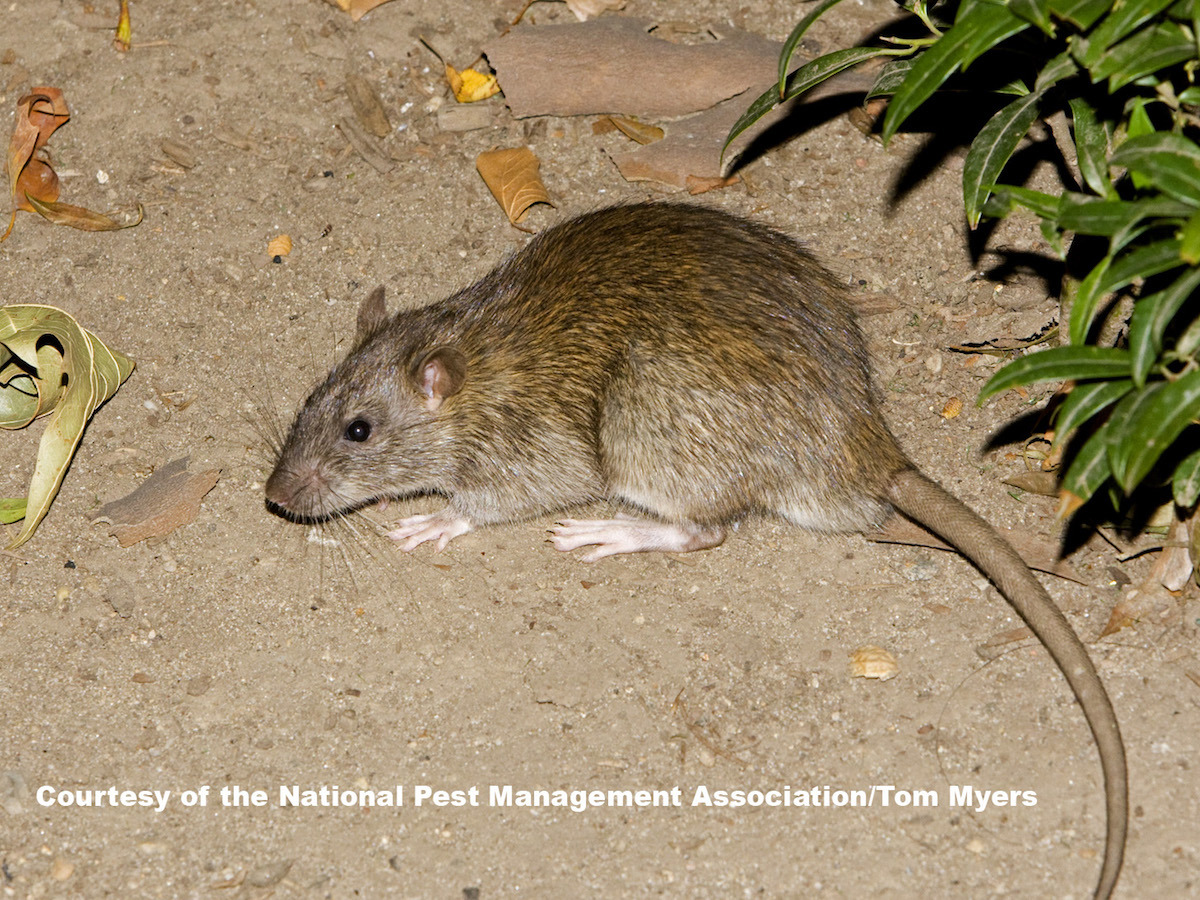
Norway rats (Rattus norvegicus) are large rodents — 200–450mm body length with a thick, blunt-nosed profile. Brown or grey with coarse fur and a tail shorter than the body length. Stocky build distinguishes them from the roof rat, which is slimmer with a tail longer than the body. Can fit through a gap as small as 20mm (3/4 inch).
🏠
Nesting Behavior
Norway rats are burrowing animals — outdoor burrows under concrete slabs, along foundations, and in dense vegetation are the primary colony site. Indoors, they nest in wall voids, below flooring, in crawlspaces, and in lower basement areas. Unlike mice, rats typically travel regular routes (runways) and are highly neophobic — suspicious of new objects like traps for 3–5 days.
🔎
Signs of Activity
Dark, capsule-shaped droppings (18–20mm) — much larger than mouse droppings. Heavy grease rub marks along walls, pipes, and joists where runways are used. Gnaw damage to wood, plastic, wiring, and concrete. Burrow openings (2–3 inches in diameter) with smooth, worn entry tunnels. Audible movement and scratching in walls and under flooring at night.
🦠
Health Risks
Rats carry Leptospirosis, Hantavirus, Rat-Bite Fever, and Salmonella. Urine contamination of water and food sources is a serious health concern. Rats also carry fleas, which can transmit additional pathogens. Never handle rats or droppings without gloves and a properly fitted N95 mask. Wet all droppings with disinfectant before removal — never dry-sweep.
📋IPM Action Steps
1
Map Runways & Burrows
Dust flour along suspected travel paths (under appliances, along walls, in crawlspaces) and check after 24 hours for footprints. Inspect the exterior foundation perimeter for burrow entrances — look for smooth-edged 2–3 inch openings with loose soil fan-out. Map every entry point and runway before any treatment begins.
2
Seal All Entry Points Before Trapping
A 3/4-inch gap allows rat entry. Systematically seal: gaps around all pipe penetrations at foundation, floor drains, utility chases, garage door thresholds, gaps under exterior doors, and any cracks in the foundation 3/4 inch or larger. Heavy-gauge hardware cloth (1/2 inch mesh) secured with masonry screws for structural openings. Never begin trapping before exclusion is complete — trapping in an open structure is a maintenance program, not a solution.
3
Eliminate Food & Harborage
Secure all garbage in hard-sided, lidded containers — not rubber or thin plastic that rats chew through. Store pet food and birdseed in metal bins. Remove compost from soil-contact containers. Eliminate brush, wood piles, and debris within 20 feet of the structure. Clean under appliances, grills, and outdoor structures where food residue accumulates.
4
Pre-Bait Trap Locations (Neophobia)
Rats are highly neophobic — they avoid unfamiliar objects for 3–5 days. Place unset, unbaited traps at identified runway locations for 3–4 days before setting them. Bait with peanut butter, bacon, or a peanut butter/oat mixture. After the pre-bait period, set traps along the runway without moving them — rats have learned to accept the object.
5
Set Large Snap Traps on Active Runways
Use rat-sized snap traps (Victor Professional Rat Trap or equivalent) — mouse traps are ineffective. Place perpendicular to the wall with the trigger plate touching the baseboard. For confirmed indoor runways, use 2–3 traps per location. For exterior burrows, place traps at the opening facing into the burrow with the trigger toward the entrance. Check every 24 hours.
6
Treat Exterior Burrows
For active outdoor burrows, place snap traps at entrances and plug inactive entrances with newspaper or loose soil — if plugged holes are reopened within 24–48 hours, the burrow is still active. For sealed burrows that remain plugged after 3 days, fill with soil and compact. Large burrow systems (more than 5–6 entrances in one area) may indicate a well-established colony that requires persistent multi-week effort.
7
Ongoing Monitoring
After activity stops, leave at least 2 monitor traps in previously active areas for 30 days. Inspect the exterior foundation every spring and fall. Re-inspect all sealed entry points annually — rats can widen cracks and compromise exclusion repairs over time, especially around drainage areas and utility penetrations.
🛠️Exclusion Material Guide
🔩
Hardware Cloth
1/2-inch galvanized hardware cloth — the gold standard for covering large structural openings (foundation vents, crawlspace access, pipe chase openings). Secure with masonry screws every 4–6 inches. Rats can widen gaps; secure edges fully. Avoid chicken wire — rats chew through it.
🔒
Xcluder Fill Fabric
Stainless steel and polymer mesh fill material for gaps up to 2 inches wide. Stuff firmly into gap, then seal with hydraulic cement or exterior silicone. Resistant to rat gnawing. Most effective for pipe penetrations at foundation and around utility conduit runs.
🏗️
Hydraulic Cement
For gaps and cracks in concrete or masonry foundations. Expands as it cures — fills voids tightly and is extremely hard for rats to chew. Apply over Xcluder mesh for redundant protection at large gaps. Use for floor drain surrounds and slab-to-wall junctions.
🛠️Prevention & Cultural Controls
🗑️
Garbage & Food Management
All exterior garbage must be in sealed, heavy-gauge containers with latching lids — rats can gnaw through thin plastic in minutes. Compost bins must be enclosed in rodent-proof structures. Eliminate pet food bowls left outdoors. Bird feeders are a major rat attractant — recommend removing them near active properties.
🌿
Harborage Elimination
Norway rats nest in burrows at the foundation, under concrete slabs, and in dense vegetation. Remove wood piles, debris, overgrown vegetation, and any ground-level clutter within 20 feet of the structure. Ivy ground cover against foundations is especially high-risk — recommend removal or aggressive trimming.
🔒
Structural Hardening
Rats can enter through gaps ½ inch or larger. Seal all foundation penetrations, damaged soffit, and crawl-space vents with heavy-gauge hardware cloth (½-inch mesh) or galvanized steel. Concrete-fill abandoned burrow entrances. Install door sweeps on all garage and ground-level doors. Bury hardware cloth barriers to prevent new burrowing.
⚗️Application Techniques
🪤 Snap Trap Deployment — Accounting for Neophobia
  1. Pre-bait for 3–4 days: Place traps in the travel position without setting them. Bait with peanut butter. Do not move traps during this period — rats learn the object is safe and begin feeding.
  2. After the pre-bait period, set traps without repositioning. The rat has already accepted the object at that exact location.
  3. Position: perpendicular to wall, trigger plate toward the baseboard. Rats run with whiskers touching the wall — the trigger is directly in their path.
  4. For exterior burrow entrances: place trap inside the entrance, trigger facing toward the opening, covered with a wooden or cardboard box with a 3-inch hole. This reduces non-target catch and keeps bait dry.
  5. Check every 24 hours. Wear gloves for all handling. Double-bag carcasses in plastic and dispose in sealed outdoor trash.
  6. If captures stop after several days in the same location, the local population may have been reduced — do not remove traps, simply move to the next most active area.
🔒 Exclusion Work — Foundation & Structural Gaps
  1. Walk the entire foundation perimeter at ground level. Probe with a screwdriver — any gap that accepts the tip needs attention.
  2. Check all pipe penetrations entering the foundation or floor: gas, water, electrical conduit. Gaps around pipes are the #1 entry point for Norway rats in Maryland homes.
  3. Stuff Xcluder mesh firmly into any gap ≥ 1/4 inch. Overlay with hydraulic cement for masonry surfaces, or stainless-steel mesh and exterior silicone for wood framing.
  4. Cover foundation vents and crawlspace openings with hardware cloth secured with masonry screws — not staples. Verify existing covers have openings ≤ 1/4 inch.
  5. Install quality threshold seals on all exterior doors. A flat hand slid under the door indicates a gap sufficient for a rat.
  6. Photograph all sealed entry points for documentation. Re-inspect all sealed points 30 days later for chew-through attempts.
🧹 Safe Cleanup — Droppings & Contamination Protocol
  1. Ventilate the area for 30 minutes before beginning cleanup. Wear gloves and a fitted N95 respirator.
  2. Saturate all droppings and contaminated material with 1:10 bleach solution (1 part bleach to 9 parts water). Allow to soak for 5 minutes. Never dry-sweep or vacuum rat droppings.
  3. Wipe up with disposable paper towels. Double-bag in heavy plastic. Seal and dispose in outdoor trash immediately.
  4. Disinfect all hard surfaces with the bleach solution. Launder any fabric contaminated with droppings or urine at 130°F+.
  5. Wash hands thoroughly with soap and water after removing gloves.
🛒Recommended Products
🪤
Victor Professional Rat Traps
Heavy-duty wood-base snap trap with a sensitive trigger. Proven design for Norway rats. Use rat-sized traps only — mouse traps are too small and will not kill rats. Place perpendicular to walls on identified runways, pre-bait before setting.
Mechanical / No Poison
🔩
Xcluder Rodent Exclusion Fill Fabric
Stainless steel and polymer mesh for stuffing gaps at foundation level. Combined with hydraulic cement, it creates a permanent barrier that rats cannot chew through. Available in pads and rolls — keep pads in service kit for on-the-spot gap sealing during inspection.
Exclusion / Physical Barrier
Victor Electronic Rat Trap
High-voltage electronic kill trap — no-touch disposal, indicator light for successful catch. Premium option for clients who want clean, no-mess removal. Effective for indoor use along confirmed runways. More expensive initial investment but very effective in tight commercial or residential spaces.
Electronic / No Poison
🏗️
Hydraulic Cement (QUIKRETE or UGL Drylok)
Fast-setting hydraulic cement for sealing cracks and gaps in concrete or masonry foundations. Expands on cure — fills irregularly-shaped gaps completely. Use over Xcluder mesh for layered protection. Essential for utility penetrations at slab level where rats consistently attempt re-entry.
Exclusion / Masonry
▶️Training Videos
🪤
Snap Traps
Victor Professional Rat Trap — Placement & Pre-Bait Technique
Understanding rat neophobia, the 3–4 day pre-bait protocol, correct perpendicular placement, and safe no-touch carcass disposal.
Search: Victor Rat Trap Placement Technique IPM
🔒
Exclusion
Rat Exclusion — Foundation Inspection & Gap Sealing
Walking the foundation perimeter, identifying all rat entry points, stuffing Xcluder mesh, applying hydraulic cement, and documenting all sealed points photographically.
Search: Norway Rat Exclusion Foundation Sealing IPM
🕳️
Burrow Treatment
Norway Rat Burrow Identification & Elimination
Identifying active vs. inactive burrows, plugging test technique, trap placement at burrow entrances, and systematic elimination of outdoor colonies.
Search: Norway Rat Burrow Trapping Control
🔎
Inspection
Reading Rat Evidence — Runs, Rubs & Droppings
How to identify rat runways using grease rub marks, distinguish rat droppings from mouse droppings, use flour tracking for activity mapping, and assess infestation severity.
Search: Rat Run Identification Rub Marks Droppings
⚠️Warnings & Herbal Shield Standards
🚫
No Rodenticides — Ever: Second-generation anticoagulant rodenticides (brodifacoum, bromadiolone) are never used in the Herbal Shield program. They bioaccumulate up the food chain and have been directly linked to the decline of raptors and other predators in Maryland's Chesapeake watershed. Exclusion and trapping provide a permanent solution without wildlife risk.
🚫
No Glue Boards for Rats: Glue boards are not only inhumane but ineffective against rats — they are strong enough to drag the board away or tear free. They are not part of the Herbal Shield toolkit for any rodent species.
⚠️
Rat Bites Are a Real Risk: A cornered or injured rat will bite. Wear thick gloves when handling any trap containing a live or dead rat. If bitten, wash the wound thoroughly with soap and water for at least 5 minutes and seek immediate medical attention — Rat-Bite Fever and Leptospirosis require prompt treatment.
🦠
Biohazard Protocol — Non-Negotiable: Gloves and an N95 mask are required for all rat cleanup. Wet droppings with disinfectant before wiping — never dry-sweep. Leptospirosis can enter through cuts or mucous membranes without any direct contact with a rat. Treat all rat-contaminated surfaces as biologically hazardous.
💬
Client Script: "Our rat program starts with sealing every way they're getting in — no trapping works long-term if that's not done first. Once we've sealed the entry points, we set professional snap traps on the routes they've been using. No poison — it's dangerous to the hawks and owls that live in your area and it doesn't actually solve the problem the way exclusion does. Most clients see resolution in 2–3 weeks."