← Mosquitoes 🖨 Care Card Camel Crickets →

Field Guide · Herbal Shield

Silverfish & Firebrats
Lepisma saccharina & Thermobia domestica

Silverfish are moisture indicator pests — their presence tells you the home has a humidity problem. Fix the moisture, and you fix the silverfish. Our approach centers on dehumidification, habitat modification, and food-grade DE — no synthetic sprays needed.

DehumidificationFood-Grade DESticky TrapsMoisture Control
🔍Identification & Behavior
🪲
Silverfish (Lepisma saccharina)
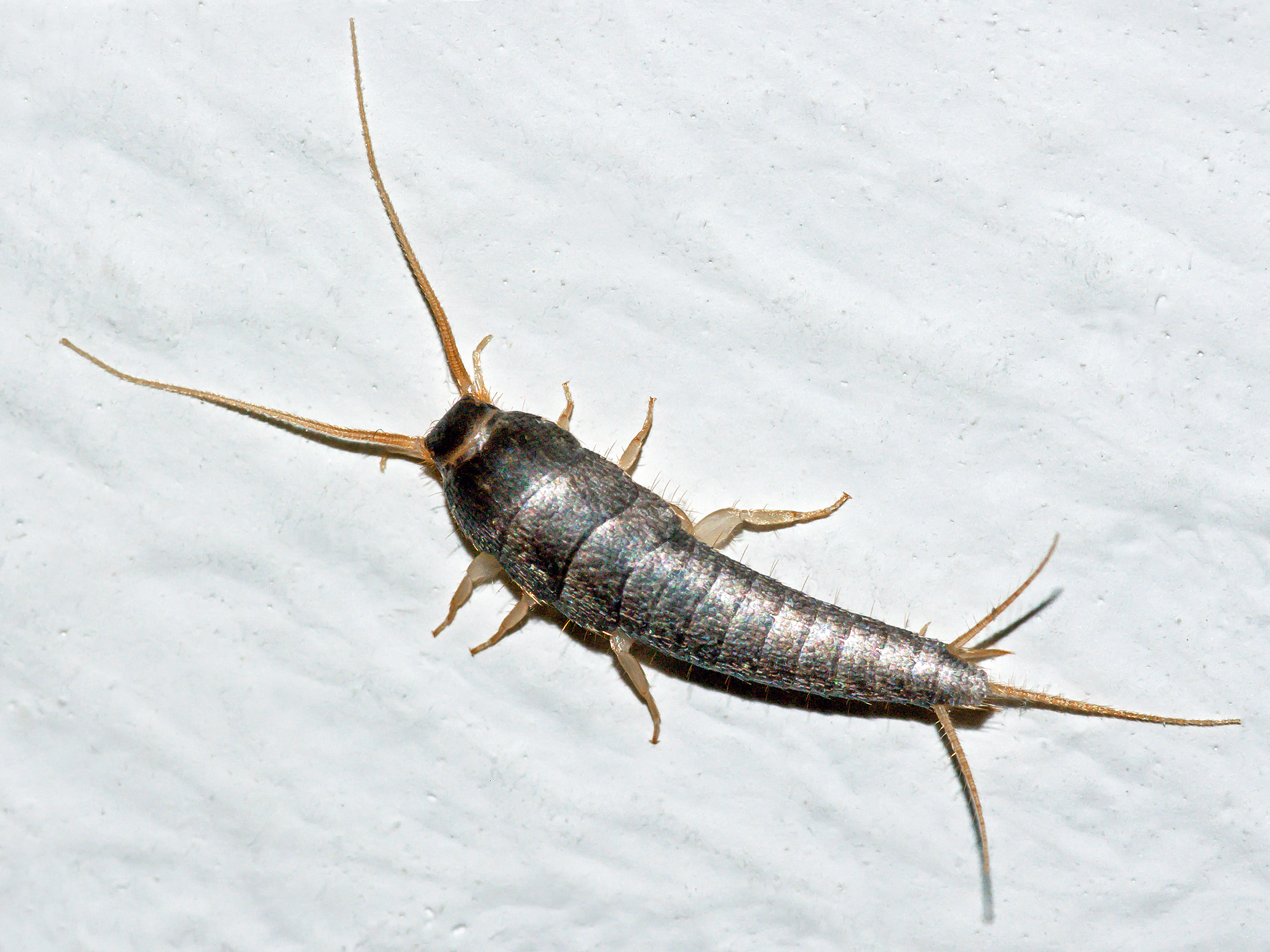
Silver to pearl-gray, teardrop-shaped, 12–19mm long with three distinctive tail bristles (cerci) and two long antennae. Wingless, carrot-shaped body covered in tiny scales that give the metallic sheen. Fast runners that use a fish-like wriggling motion. Strictly nocturnal — usually spotted when lights are turned on at night in bathrooms, basements, and kitchens.
🔥
Firebrats (Thermobia domestica)
Mottled gray-brown with darker banding, same body shape and size as silverfish but prefer hotter, more humid environments. Commonly found near furnaces, boilers, hot water heaters, and heating ducts. In Maryland homes, firebrats concentrate in utility rooms and unfinished basements near HVAC equipment. Same damage profile as silverfish.
📋
Damage & Diet
Feed on starches, sugars, and proteins found in: paper, book bindings, wallpaper paste, cardboard boxes, photographs, cotton and linen textiles, cereal, flour, and dried pasta. They also eat glue in book spines, sizing on paper, and even dandruff and dead skin cells. Damage appears as irregular holes, surface etching, or yellowed feeding marks on paper products.
💧
Why They're Here
Silverfish require 75–95% relative humidity to thrive and reproduce. Their presence is a direct indicator of excess moisture — leaky pipes, poor ventilation, missing vapor barriers, or inadequate dehumidification. Remarkably long-lived (2–8 years) and can survive months without food, so populations persist even after food sources are reduced if moisture remains.
📋IPM Action Steps
1
Identify the Species
Confirm silverfish vs. firebrat — the distinction determines where to focus treatment. Silverfish favor cool, damp areas (bathrooms, basements). Firebrats favor hot, humid zones (near furnaces, water heaters). Both are nocturnal; inspect with a flashlight after dark or use sticky traps.
2
Assess Moisture Levels
Use a hygrometer to measure relative humidity in affected rooms. Any reading above 60% RH is favorable for silverfish; above 75% is ideal breeding conditions. Check basements, crawl spaces, bathrooms, and under-sink cabinets. Document readings for each area — this becomes the treatment map.
3
Dehumidify — The Primary Fix
Target below 50% RH in all affected areas. Recommend a whole-home or portable dehumidifier for basements and crawl spaces. Ensure bathroom exhaust fans vent to the outside (not into the attic). Run exhaust during and 30 minutes after showers. This single step resolves most silverfish problems within 2–4 weeks.
4
Deploy Sticky Traps to Map Population
Place sticky traps along baseboards, behind toilets, under sinks, and in closets near suspected harborage. Check traps every 48–72 hours. Trap counts reveal population hotspots and guide DE placement. Continue trapping through treatment to measure progress.
5
Apply Food-Grade DE in Cracks & Voids
Use a bellows duster to apply a thin, barely-visible film of food-grade diatomaceous earth inside wall voids (through outlet covers), behind baseboards, under bathroom vanities, inside cabinet toe kicks, and along pipe chases. DE must stay dry to remain effective — do not apply in areas that get wet.
6
Reduce Food Sources
Store books, papers, and photographs in sealed plastic bins. Move cardboard boxes off basement floors. Keep dry goods (cereal, flour, pasta) in airtight containers. Reduce paper clutter — stacked newspapers and magazines are silverfish buffets.
7
Seal Entry from Crawl Space & Basement
Caulk gaps around pipes, electrical conduits, and baseboards where silverfish travel between wall voids and living spaces. Install door sweeps on basement doors. Ensure crawl space vapor barriers are intact and properly sealed at seams. Address any standing water or drainage issues in crawl spaces.
🛠️Prevention & Cultural Controls
💧
Dehumidification
The single most effective control. Portable dehumidifiers in basements, whole-home units for chronic problems. Target <50% RH year-round. Empty and clean dehumidifier reservoirs regularly. In crawl spaces, a commercial-grade unit with a drain hose is the permanent solution.
🌬️
Ventilation
Ensure bathroom exhaust fans vent to the exterior (not the attic). Run fans during and 30 minutes after every shower. Open windows in mild weather to improve airflow. In basements, a small circulating fan reduces stagnant humid pockets.
📦
Storage & Habitat Modification
Replace cardboard boxes with sealed plastic bins. Store valuable books and papers in climate-controlled areas. Install vapor barriers in crawl spaces — 6-mil polyethylene, sealed at seams with tape. Keep basement floors clear and dry. Fix all plumbing leaks promptly.
⚗️Application Techniques
💨 Diatomaceous Earth — Wall Voids & Behind Baseboards
  1. Use a bellows duster to apply a thin, barely-visible film — heavy piles are counterproductive and waste product.
  2. Target: inside wall voids (remove outlet cover plates), behind baseboards, under bathroom vanities, inside cabinet toe kicks, along pipe chases.
  3. DE must stay dry — it loses all effectiveness when wet. Never apply in areas where moisture accumulates (under leaky sinks, damp crawl spaces).
  4. Apply boric acid dust in inaccessible wall voids and enclosed crawl space perimeters where DE may get damp — boric acid retains some effectiveness in higher humidity.
  5. Reapply after cleaning or if the area gets wet. In dry voids, DE remains effective indefinitely.
  6. Vacuum excess product from visible surfaces after 10–14 days once activity has stopped.
🪤 Sticky Trap Placement — Monitoring & Population Mapping
  1. Place traps flat against baseboards in bathrooms, kitchens, basements, closets, and utility rooms.
  2. Behind toilets, under sinks, and inside linen closets are high-priority locations.
  3. Space traps every 6–8 feet along walls in basements and crawl space access points.
  4. Check traps every 48–72 hours during initial assessment. Record counts per location to identify hotspots.
  5. Continue trapping through the treatment period — declining trap counts confirm dehumidification and DE are working.
  6. Replace traps when they become dusty or full. Discard used traps in sealed bags.
🌡️ Boric Acid — Inaccessible Voids Only
  1. Reserve boric acid for enclosed voids where DE would get damp — crawl space perimeters, enclosed pipe chases, deep wall cavities near plumbing.
  2. Apply with a bellows duster using the same thin-film technique as DE.
  3. Boric acid is mildly toxic — keep away from food preparation surfaces and areas accessible to children and pets.
  4. Label all application areas with date and product name for follow-up tracking.
🛒Recommended Products
⚗️
Harris Food-Grade Diatomaceous Earth
Food-grade DE with powder duster included. Apply thin layers in dry cracks, voids, and behind baseboards. Physically damages silverfish exoskeletons through abrasion and desiccation — no chemical toxicity. The primary treatment tool for silverfish in dry harborage areas.
Food-Grade DE / Mechanical
🪤
Catchmaster Silverfish & Insect Sticky Traps
Non-toxic glue traps for monitoring and population mapping. Place along baseboards, behind toilets, and under sinks. Check every 48–72 hours. Trap counts guide treatment placement and measure effectiveness over time. Essential for IPM documentation.
Monitoring / Non-Toxic
🌡️
ThermoPro Digital Hygrometer
Accurate indoor humidity and temperature monitor. Place in each affected room to document baseline humidity and track dehumidification progress. Target: below 50% RH. An essential diagnostic tool — silverfish problems are moisture problems, and you need data to prove the fix is working.
Diagnostic / Monitoring
💧
Portable Dehumidifier (50-pint capacity)
Recommend a 50-pint (or larger) Energy Star dehumidifier for basements and large crawl spaces. Set to maintain 45–50% RH. Models with built-in pumps or continuous drain hoses eliminate the need to empty buckets. This is the single most impactful purchase for resolving silverfish infestations.
Environmental Control / Primary Fix
▶️Training Videos
💨
Dust Application
Diatomaceous Earth — Indoor Crack & Crevice Technique
Bellows duster technique, thin-layer application into cracks and voids, keeping product dry, and when to reapply. Same technique applies to silverfish as to ants.
Search: Harris Diatomaceous Earth Application Tutorial
🪤
Monitoring Setup
Sticky Trap Placement for Silverfish Monitoring
Where to place traps, how often to check, recording counts, and using trap data to guide DE application and track dehumidification progress.
Search: Silverfish Sticky Trap Monitoring IPM
💧
Environmental Control
Basement Dehumidification for Pest Prevention
Selecting and sizing a dehumidifier, optimal placement, target humidity levels, and maintaining consistent moisture control to eliminate silverfish habitat.
Search: Basement Dehumidifier Setup Pest Control
🏗️
Crawl Space
Crawl Space Vapor Barrier Installation
Installing 6-mil polyethylene vapor barriers, sealing seams, proper overlap technique, and why crawl space encapsulation is the long-term silverfish solution.
Search: Crawl Space Vapor Barrier Installation DIY
⚠️Warnings & Herbal Shield Standards
⚠️
Silverfish Are an Indicator Pest: Their presence signals a moisture problem in the home. Treating silverfish without addressing humidity is like mopping a floor while the faucet is still running. Always lead with dehumidification — it's both the diagnosis and the cure.
🚫
Never Use Synthetic Sprays: Pyrethroid sprays and residual insecticides are unnecessary for silverfish and inconsistent with Herbal Shield's least-toxic brand promise. Silverfish do not form colonies — there's no colony to kill. Environmental control and physical barriers are far more effective and permanent.
🌿
DE Must Stay Dry: Food-grade diatomaceous earth works by physically abrading the insect's waxy cuticle, causing desiccation. When wet, DE clumps and loses all effectiveness. Only apply in dry voids and cracks. For damp areas, use boric acid dust instead. Always wear a dust mask during application.
💬
Client Script: "Silverfish are telling us this home has a moisture issue — they need 75% humidity or higher to thrive. The most effective treatment is getting your humidity below 50% with a dehumidifier. We'll also apply a natural mineral dust in the cracks and voids where they're hiding, and set up monitoring traps to track the population. Within 2–4 weeks of consistent dehumidification, you should see a significant decline. No spraying needed — just controlling the environment."
💬
Client Script — Why Not Spray: "A lot of companies will spray for silverfish, but here's the thing — silverfish aren't like ants or roaches. They don't nest in colonies, so there's no colony to kill. They're here because the humidity is right for them. If we spray and kill the ones we see, more move in from the walls because the moisture is still there. When we bring the humidity below 50%, the environment becomes hostile to them and they can't survive or reproduce. That's a permanent fix, not a temporary one."