← Drain Flies 🖨 Care Card

Field Guide · Herbal Shield

Squirrels
Sciurus carolinensis & Glaucomys volans

Resourceful attic invaders that gnaw wiring, tear insulation, and create noise and latrine problems. The fix is one-way exclusion doors — not poisons, not traps. Let them leave, seal them out permanently, and remove what drew them in.

ExclusionOne-Way DoorNo PoisonsAttic Pest
🔎Identification & Behavior
🐿️
Eastern Gray Squirrel
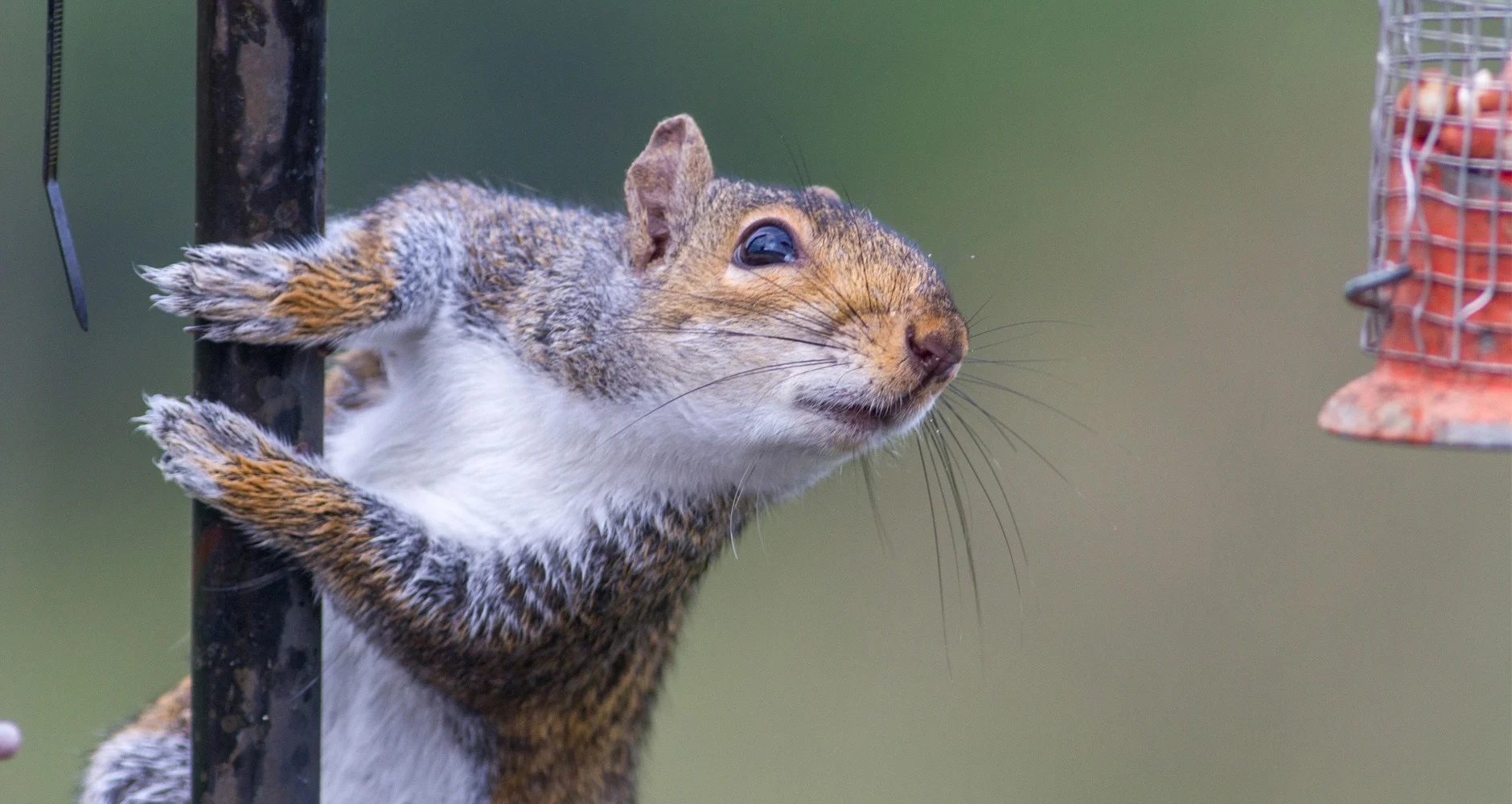
Sciurus carolinensis — 18–20 inches including bushy tail, gray to brown fur, white underside. Maryland’s most common attic invader. Active at dawn and dusk. Excellent climbers and jumpers — can leap 8+ feet horizontally and drop 20+ feet without injury. Exploit or chew holes as small as 1.5 inches.
🦇
Southern Flying Squirrel
Glaucomys volans — smaller (8–10 inches), with a gliding membrane between front and hind legs. Strictly nocturnal. Large dark eyes, silky gray-brown fur. Often present in colonies of 6–15 in a single attic. Scratching and scurrying sounds at night are the primary indicator. Less common but frequently misidentified as mice.
🔨
Entry Points & Damage
Exploit or chew holes >1.5 inches at roof-soffit intersections, gable vents, plumbing stacks, and dormers. Once inside: gnaw electrical wiring (fire hazard), tear and compress insulation (reducing R-value), create latrine areas that stain ceilings and attract secondary pests, and generate persistent noise complaints.
📅
Two Nesting Seasons
Gray squirrels have two litters per year: spring (March–May) and fall (August–September). Babies are helpless for 8–10 weeks. Never seal entry points during nesting season without confirming no babies inside — trapped young die in the attic, creating odor and secondary pest problems.
📋IPM Action Steps
1
Identify Species & Entry Points
Conduct a full exterior roof inspection: check roof-soffit intersections, gable vents, plumbing stack boots, dormer corners, and fascia gaps. Inside the attic, look for nesting material (leaves, insulation, paper), gnaw marks on wiring and wood, droppings, urine staining, and worn runway paths. Dawn/dusk activity = gray squirrel; nighttime activity = flying squirrel.
2
Confirm No Babies in Nest
Critical before any exclusion work. During spring (March–May) and fall (August–September), inspect the attic carefully for a nest with young. Listen for high-pitched chirping. Baby squirrels are helpless for 8–10 weeks and cannot exit through a one-way door. If babies are present, delay exclusion until they are mobile (typically 10–12 weeks old).
3
Install One-Way Exclusion Doors
Mount a steel one-way exclusion funnel over the primary entry point. The funnel allows squirrels to exit but prevents re-entry. Secure with screws into solid framing — not just into siding. Ensure the funnel extends far enough that the squirrel cannot reach back and re-enter. This is the most humane and effective method.
4
Seal All Secondary Entry Points
While the one-way door is active, seal every other potential entry with 1/2-inch galvanized hardware cloth or steel flashing. Cover gable vents, plumbing stack gaps, dormer junctions, and fascia gaps. Use steel — squirrels chew through wood, plastic, and expandable foam. Overlap hardware cloth 2 inches past each edge and secure with screws.
5
Remove Attractants
Relocate or remove bird feeders within 10 feet of the house — spilled seed is a primary squirrel attractant. Trim tree branches to maintain 8+ feet of clearance from the roof, gutters, and utility lines. Remove fruit-bearing vines growing on the structure. Cap the chimney with a steel chimney cap.
6
Monitor One-Way Door for 1–2 Weeks
Leave the one-way door in place for 1–2 weeks minimum. Check for signs of continued activity: fresh droppings, new gnaw marks, or sounds. If multiple squirrels are present (common with flying squirrels), all must exit before permanent sealing. Patience is essential — rushing this step causes re-entry.
7
Permanently Seal Primary Entry
Once the attic is confirmed empty (no activity for 5+ consecutive days), remove the one-way door and permanently seal the primary entry with steel flashing or hardware cloth. Inspect all other sealed points for integrity. Schedule a follow-up inspection in 30 days to confirm no re-entry.
🛠️Prevention & Cultural Controls
🌳
Branch & Canopy Management
Trim all tree branches to maintain 8+ feet of clearance from the roof, gutters, power lines, and any structure. Squirrels can jump 8 feet horizontally and drop from much higher. Remove ivy, wisteria, and other climbing vines that provide access routes to the roof.
🔨
Annual Roof & Soffit Inspection
Inspect the roof-soffit junction, gable vents, plumbing stacks, and dormer corners annually in late summer before fall nesting season. Look for gnaw marks, gaps, loose flashing, or rotted wood. Repair vulnerabilities before squirrels exploit them. Prevention is far cheaper than exclusion after entry.
🐦
Bird Feeder & Food Sources
Relocate bird feeders 10+ feet from the house and mount on squirrel-proof poles. Clean up spilled seed regularly. Remove fallen fruit and nuts from the yard. Cap trash cans tightly. Reducing food availability near the structure makes the attic less attractive as a nesting site.
⚗️Exclusion Material Guide
🔨 1/2-Inch Galvanized Hardware Cloth
  1. The primary exclusion material for squirrels. 1/2-inch galvanized hardware cloth resists gnawing and corrosion.
  2. Cover gable vents, soffit gaps, and plumbing stack openings. Overlap 2 inches past each edge of the opening.
  3. Secure with screws into solid framing — not staples, not into siding alone. Squirrels will pry loose stapled mesh.
  4. For curved or irregular openings, hardware cloth can be bent and shaped to fit. Cut with aviation snips.
  5. Do NOT use chicken wire (too weak), window screen (too thin), or plastic mesh (chewed through immediately).
🛡️ Steel Flashing & Sheet Metal
  1. Use galvanized steel flashing (26-gauge or heavier) to cover gnawed holes in fascia, soffits, and roof decking.
  2. Cut flashing 3–4 inches larger than the hole on all sides. Bend edges for a tight fit against the surface.
  3. Secure with screws into solid framing. Caulk the perimeter with exterior-grade sealant to prevent water intrusion.
  4. For roof-soffit intersections, steel flashing provides a permanent, chew-proof barrier that matches the roofline aesthetically.
  5. Paint to match exterior if the client prefers — this does not affect performance.
🐿️ One-Way Exclusion Funnel Installation
  1. Mount the steel one-way exclusion funnel directly over the primary entry point with the wide end flush against the structure.
  2. Secure the flange with screws into solid framing. The funnel must be tight against the surface with no gaps where a squirrel could squeeze back in.
  3. The narrow exit end should extend 6–8 inches from the wall so the squirrel cannot reach back and grip the opening.
  4. Leave in place for 1–2 weeks minimum before removing and permanently sealing.
  5. Check daily for signs of continued activity. Multiple squirrels require more patience.
  6. Never use one-way doors during nesting season without first confirming no babies are present inside.
🚫 What NOT to Use
  1. Expandable foam alone — squirrels chew through it within hours. Only use foam as a filler behind steel hardware cloth or flashing.
  2. Chicken wire — too weak. Squirrels bend and tear standard chicken wire easily.
  3. Plastic mesh or vent covers — chewed through immediately. Always replace with steel.
  4. Wood patches — squirrels gnaw through wood readily. Wood repairs must be backed with steel.
  5. Steel wool alone — effective for mice but insufficient for squirrels. Use steel wool only as gap filler behind hardware cloth.
🛒Recommended Products
🔨
1/2-Inch Galvanized Hardware Cloth
The primary exclusion material. Covers gable vents, soffit gaps, and plumbing stack openings. Chew-proof and corrosion-resistant. Secure with screws into solid framing. Available in rolls at any hardware store.
Exclusion / Steel
🐿️
Steel One-Way Exclusion Door
Heavy-gauge steel funnel that mounts over the primary entry point. Squirrels exit through the narrow end but cannot re-enter. Leave in place 1–2 weeks, then permanently seal. The humane, legal, and most effective approach.
Exclusion / Humane
🛡️
Galvanized Steel Flashing
26-gauge or heavier galvanized steel for patching gnawed holes in fascia, soffits, and roof decking. Cut 3–4 inches larger than the hole, secure with screws, and caulk perimeter. Permanent, chew-proof repair.
Exclusion / Repair
🔥
Steel Chimney Cap
Heavy-gauge steel cap with mesh screen to prevent squirrel entry through uncapped chimneys. Also prevents raccoons, birds, and debris accumulation. Professional installation recommended for proper fit and flashing integration.
Exclusion / Prevention
▶️Training Videos
🐿️
Exclusion
One-Way Exclusion Funnel — Installation & Monitoring
Mounting the one-way door over the primary entry, securing to solid framing, monitoring for exit confirmation, and permanent sealing after vacating.
Search: Squirrel One-Way Exclusion Door Installation
🔨
Sealing
Hardware Cloth & Steel Flashing — Sealing Entry Points
Cutting, shaping, and securing hardware cloth and steel flashing over gable vents, soffit gaps, plumbing stacks, and gnawed holes.
Search: Squirrel Proofing Hardware Cloth Steel Flashing
🔎
Inspection
Attic Inspection for Squirrel Activity & Nesting
Identifying droppings, gnaw marks, urine staining, nesting material, wiring damage, and confirming presence or absence of baby squirrels before exclusion.
Search: Squirrel Attic Inspection Nesting Signs
🌳
Prevention
Branch Trimming & Attractant Removal for Squirrel Prevention
Maintaining 8-foot tree clearance from the roof, relocating bird feeders, capping chimneys, and annual roof-soffit inspection protocol.
Search: Squirrel Prevention Branch Trimming Bird Feeder
⚠️Warnings & Herbal Shield Standards
🚫
No Rodenticides — Ever: Herbal Shield never uses rodenticides for squirrel control. Poisoned squirrels die in wall voids and attics, creating severe odor and attracting blowflies, dermestid beetles, and other secondary pests. Poisoned squirrels are also consumed by raptors, foxes, and neighborhood cats, causing secondary poisoning up the food chain. This is a firm, non-negotiable standard.
⚠️
NEVER Seal During Nesting Season Without Checking: During spring (March–May) and fall (August–September), always inspect the attic for babies before any exclusion work. Trapped baby squirrels cannot exit through a one-way door, will die in the attic, and create odor, staining, and secondary pest problems. If babies are found, delay exclusion until they are mobile (10–12 weeks old).
📜
Maryland Law — Game Animal Protection: Squirrels are classified as game animals under Maryland DNR regulations. Live trapping and relocation require a DNR Nuisance Wildlife Permit. One-way exclusion is the legal, humane, and most effective approach — no permit required because no animal is captured or handled.
🐿️
One-Way Exclusion Is the Gold Standard: One-way doors allow squirrels to leave on their own schedule, without stress, handling, or injury. Combined with permanent sealing of all entry points, this method has the highest long-term success rate. It is humane, legal, and consistent with the Herbal Shield brand promise.
⚠️
Wiring Damage = Fire Hazard: Squirrels gnaw electrical wiring, creating exposed conductors that can arc and start attic fires. After exclusion, always recommend a licensed electrician inspect attic wiring for gnaw damage. Document any wiring damage found during attic inspection with photos for the client.
💬
Client Script: “We don’t use poisons or traps for squirrels — we use one-way doors that let them leave but not return, then permanently seal the entry. This is the safest and most effective approach, and it avoids harming the animals. Squirrels are protected as game animals in Maryland, so this humane exclusion method is also the legal one. We’ll also check for babies before we start, trim back the branches giving them roof access, and recommend an electrician inspect the wiring for gnaw damage.”
💬
Client Script — Why We Don’t Poison or Trap: “The reason we don’t use poison is that a poisoned squirrel dies inside your wall or attic, creating a terrible smell that can last weeks and attracting flies and beetles. The poison also enters the food chain when hawks, owls, or neighborhood cats eat the affected animal. Trapping requires a state permit and creates stress for the animal, and you still have to seal the hole or a new squirrel moves in. The one-way door is better in every way — the squirrel walks out on its own, we seal the entry permanently, and the problem is solved without harming anything.”