FIELD GUIDE — STRUCTURAL PEST
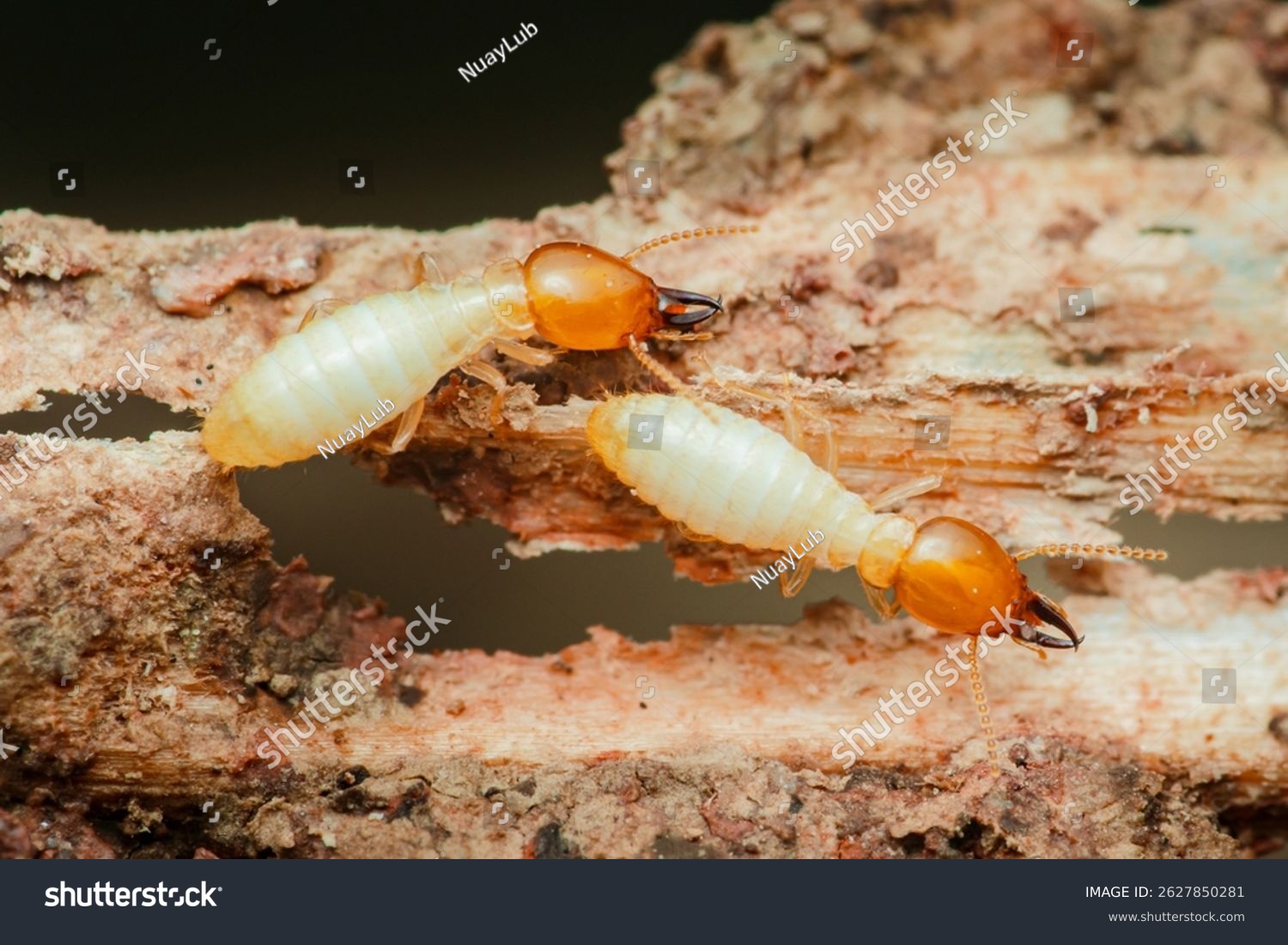
The Eastern subterranean termite is Maryland's most destructive structural pest, causing billions in damage nationally each year. Colonies live underground and build mud tubes to reach above-ground wood. Herbal Shield focuses on moisture elimination, physical barriers, monitoring stations, and borate wood treatments — never broad-spectrum soil drenches.
Termites require professional structural inspection. This is not a DIY pest. Herbal Shield technicians conduct thorough WDI (Wood-Destroying Insect) inspections per Maryland Department of Agriculture standards.
Inspection checklist: Foundation perimeter (interior and exterior) for mud tubes · Sill plates and rim joists — probe with screwdriver, listen for hollow sound · Plumbing penetrations through slab · Expansion joints · Garage-to-house connections · Crawlspace piers, posts, joists, and subfloor · HVAC closets and utility chases · Exterior: grade contact with siding, stored wood, mulch depth, downspout drainage, stucco/foam below grade.
Documentation: Written report with diagram showing damage locations, moisture readings (pin-type meter), mud tube locations, and photo evidence. Required for real estate transactions (NPMA-33 form in Maryland). Don't be afraid to recommend a second opinion — transparency builds trust.
Moisture is the termite's lifeline. Eliminate it and you collapse the colony's ability to maintain above-ground foraging. This is the single most impactful intervention.
Repair all plumbing leaks, especially in crawlspaces and behind walls · Fix leaking HVAC condensate lines · Redirect downspouts 4+ feet from foundation · Correct grading to slope away from structure (6 inches drop in 10 feet) · Install or repair vapor barrier in crawlspace (6-mil poly, sealed at seams and walls) · Add crawlspace ventilation or dehumidifier to maintain <60% relative humidity · Fix leaking roofs and ensure proper flashing · Install fan-powered kitchen and bathroom vents to control interior moisture.
Crawlspace ventilation note: Ensure at least two (ideally four) ventilation openings within 10 feet of corners for cross-ventilation. Open vents in winter, close in summer to prevent condensation.
Eliminate all wood-to-soil contact. Maintain minimum 6 inches (ideally 12 inches) of clean, visible concrete foundation between soil surface and any structural wood.
Cultural practices: Remove all scrap wood, form boards, stumps, grade stakes from within 10 feet of foundation · Pull mulch back 4+ inches from siding (or replace with gravel/stone) · Move firewood, lumber, and compost piles at least 10 feet from structure · Trim shrubbery blocking airflow through foundation vents · Keep planter boxes 4+ inches from the house.
Seal entry points: Fill cracks and voids in concrete or masonry with expanding polyurethane grout or hydraulic cement. Caulk around sinks, bathtubs, and plumbing penetrations. Screen windows, doors, and vents with 20-gauge mesh.
Advanced barriers (new construction or accessible foundations): Sand grain barriers (16–30 mesh basaltic sand, 4-inch layer) — grains too heavy for termites to move, gaps too small to pass through. Stainless steel mesh (Termimesh™) — reported 100% effective after 5+ years of testing. Steel termite shields on top of foundation piers force mud tubes out into the open where they can be detected.
Borate-based wood preservatives are the cornerstone of Herbal Shield's least-toxic termite management. Applied to exposed framing, borates penetrate wood and create a permanent termite barrier. Boric acid kills termites by inhibiting digestive enzymes, causing them to starve. It also acts as an antifeedant at higher concentrations.
Products:
Bora-Care® (disodium octaborate tetrahydrate) — our primary product. Applied to bare wood in crawlspaces, basements, and accessible framing. Two coats for maximum penetration. Protects for the life of the structure.
Jecta® — injectable borate gel for in-place wood treatment through small drilled holes. Ideal for wood already installed and inaccessible for surface application.
Tim-bor® — spray-on borate for post-construction surface treatment of accessible framing.
Application requirements: Bare, unpainted, untreated wood only. Cannot be applied to wet wood or in freezing conditions. PPE: N95 respirator, safety goggles, chemical-resistant gloves. Re-entry: 4 hours after drying. Two coats for maximum penetration.
In-ground monitoring stations are installed every 10–15 feet around the foundation perimeter. Stations contain untreated wood or cellulose cartridges that are inspected quarterly.
If termite activity is detected in a station, the wood cartridge is replaced with a bait matrix containing a chitin synthesis inhibitor (CSI) such as noviflumuron. Worker termites carry the bait back to the colony, where it disrupts molting and gradually eliminates the colony over 2–6 months. This is far more targeted than soil drenching.
Herbal Shield protocol: Quarterly monitoring for first year, then semi-annual if no activity detected. All stations mapped and documented in client file with GPS coordinates. Activity photos provided to client at each inspection. Bait consumption tracked and recorded.
Herbal Shield does not perform conventional liquid soil barrier treatments. These "soil drench" applications inject hundreds of gallons of synthetic termiticide (fipronil, imidacloprid, bifenthrin, or permethrin) into the soil around a home's foundation — contaminating groundwater, killing soil organisms, poisoning bees and aquatic life, and creating long-term chemical exposure for the family.
We also do not perform whole-structure fumigation (tenting) with sulfuryl fluoride — a potent greenhouse gas and acute toxicant. Fumigation is unnecessary for subterranean termites and inappropriate for our service area.
Other chemicals we avoid: acetamiprid, chlorantraniliprole, chlorfenapyr, cyfluthrin, cypermethrin, esfenvalerate, lindane — all carry acute health, chronic health, groundwater contamination, wildlife, or bee toxicity concerns.
If a client has an active, severe infestation with structural compromise beyond our scope, we will honestly recommend a licensed structural pest operator and provide guidance on selecting one who uses targeted, least-toxic methods. We never overstate our capabilities — honesty about our limits builds more trust than overpromising.