← Termites 🖨 Care Card Household Ants →
Stinging Insect — Field Guide

Wasps & Yellowjackets
Vespidae family

Social and solitary stinging insects that nest in the ground, under eaves, and inside wall voids. Beneficial pollinators and predators — but capable of aggressive defense and multiple stings. Learn identification, nest location, safe removal, and prevention.

Stinging Insect Allergy Risk Beneficial Pollinator
🔍Identification & Behavior
Wasp
Yellowjackets & Hornets
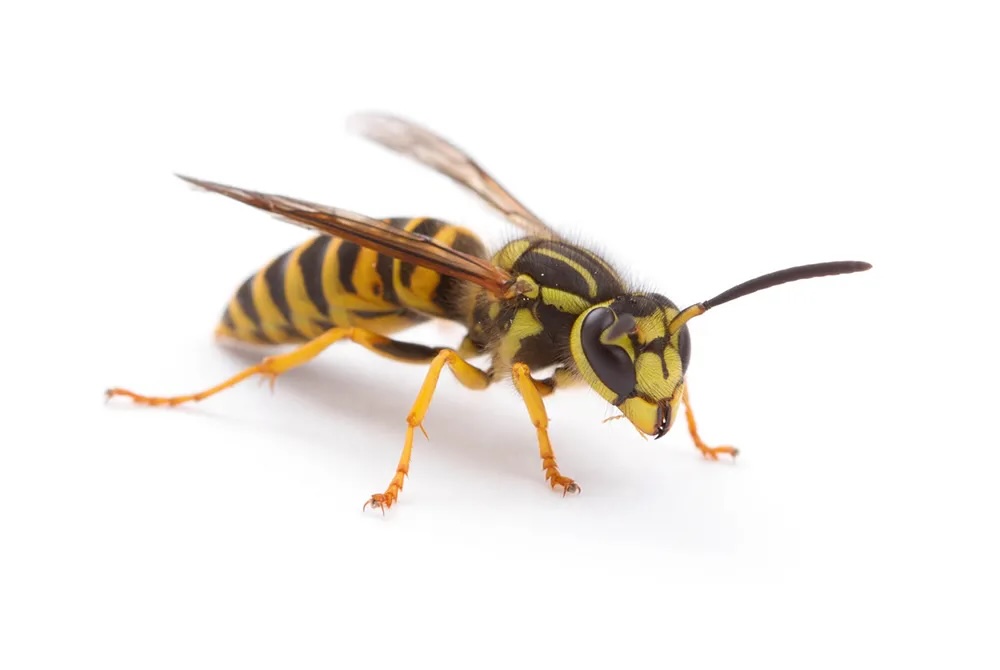
Stout-bodied, colorful — mostly black and yellow (yellowjackets) or black and white (bald-faced hornets). Rapid fliers, aggressive, capable of inflicting multiple stings. Social insects that build large colonies of 1,000–5,000 workers by late summer. Nests are multilayered with an outer papery covering called an envelope. Most ground-nesting, though some build aerial nests or colonize wall voids.
Paper Wasps
Long bodies with thin waists and long dangling legs. Social but not very aggressive unless the nest is disturbed. Build small, open-comb papery nests without an envelope — often shaped like an umbrella. Common locations: under eaves, on fences, behind shutters, inside mailboxes, and on porch ceilings. Smaller colonies of 20–75 workers.
Solitary Wasps
Thin- or thick-waisted, often visiting flowers. Relatively docile — they rarely sting unless handled. Nest in mud tubes or small holes in the ground surrounded by piles of dirt. Mud daubers, cicada killers, and sand wasps fall into this category. Generally beneficial and should be left alone if not in a high-traffic area.
Sting Risk & Medical Significance
Unlike honey bees, wasps and yellowjackets can sting multiple times without dying. Systemic allergic reactions occur in 1–3% of the population, causing approximately 50 deaths annually in the U.S. Even non-allergic individuals can suffer severe pain, swelling, and secondary infection. Crushing a wasp releases alarm pheromones that signal other wasps to attack — never swat at them.
Life Cycle & Maryland Seasonality
Spring (April–May): Overwintered queens emerge and begin building small starter nests. Best time for inspection and control — nests are tiny.

Summer (June–Aug): Colony grows rapidly. Workers forage for protein (caterpillars, flies, meat) to feed larvae. Populations peak at 1,000–5,000 for yellowjackets.

Late Summer/Fall (Aug–Oct): Colony shifts to sugar-seeking behavior — wasps become more aggressive around food, drinks, and garbage. New queens and males are produced.

Winter: All workers die. Only newly mated queens survive, hibernating in protected spaces (wall voids, leaf litter, wood piles) to restart the cycle next spring.
Nest Locations
Underground (most common): Yellowjackets nest in abandoned rodent burrows, under shrubs, logs, rock piles. Look for bare earth around entrance holes and steady wasp traffic in/out.

Aerial: Paper wasps build under eaves, porch ceilings, and branches. Bald-faced hornets build large football-shaped nests in trees and on structures.

Wall Voids & Structures: The most challenging nests. Wasps enter through cracks, splintered wood, unscreened vents, and gaps in fascia. Often the only sign is wasps flying in and out of a small crack.
📋IPM Action Steps
1
Conduct a Thorough Spring Inspection
Spring is the best time for control — nests are just forming and colonies are small. Walk the entire property perimeter, inspect under eaves, inside garages and sheds, scan for ground nest entrance holes (bare earth, steady wasp traffic). Nests in wall voids are found by observing wasps entering and leaving through cracks. Check a 40–50 foot radius around any suspected nest for auxiliary openings.
2
Remove Food Attractants
Wasps are attracted to protein foods early in summer and sugary foods late in the season. Seal garbage cans with tight-fitting lids. Clean recyclables before storing. Empty dumpsters frequently. Feed pets indoors. Use lids and straws for outdoor beverages. Store sugary snacks in closed containers. Eliminating food sources prevents colony growth beyond what natural food can sustain.
3
Seal & Exclude — Close All Entry Points
Inspect exterior surfaces methodically: cracks in stucco, splintered or rotten wood, holes in foundation, unscreened vents, loose shingles, open plumbing cuts, loose fascia boards. Seal with caulk, copper mesh, spackle, aerosol foam insulation, or cement patch. Cover attic and crawl space vents with fine mesh insect screen. Seal open ends of hollow fences with expanding foam. This prevents wall-void nesting.
4
Deploy Monitoring Traps
Place commercial wasp traps around the property perimeter, near known problem areas, and along outdoor dining/play zones. Bait with protein (dog food, ham, fish scraps) early season and sugar syrups or spoiled fruit late season. Traps reduce populations, provide early warning of colony buildup, and monitor effectiveness of ongoing control. Check and rebait weekly during peak season.
5
Treat Nests — Least-Toxic Methods First
Ground nests: Pour a soap and water solution (dish soap or peppermint castile soap) directly into the entrance at dusk when all workers are inside. Repeat the next evening if activity continues.

Aerial nests: Apply an enzyme-based solution (Super C Professional) or peppermint soap spray early morning or late evening. Knock down the comb after treatment and dispose.

Wall void nests: Apply silica aerogel desiccating dust through a small drilled hole into the nest cavity. The dust abrades the waxy coating on insects, causing dehydration. Always wear N95 mask and goggles. Avoid pyrethrin-combined products.
6
Seal Nest Entrances — Only After Confirmed Kill
For wall void nests, do not seal the entrance until all wasps are confirmed dead. Sealing too early forces survivors into the living space. For fall-treated nests, it may be best to wait until freezing temperatures kill the colony naturally. Once confirmed empty, seal the entrance with caulk to prevent a new queen from reusing the same cavity next spring.
🛠️Prevention & Cultural Controls
🗑️
Sanitation & Food Removal
Eliminate protein and sugar food sources outdoors. Use sealed garbage cans with domed or spring-loaded lids. Clean dumpster lids of food residue. Store pet food indoors. Clean recyclables. Use lids and straws on outdoor beverages. Monitor daily during peak season (Aug–Oct).
🔒
Structural Exclusion
Seal all potential entry points: cracks in siding, gaps around pipes, loose fascia boards, unscreened vents. Use copper mesh, caulk, cement patch, and fine mesh insect screen. Inspect and repair annually in early spring before queens begin nesting.
🧴
Scent & Behavior Avoidance
Advise clients to avoid wearing perfumes, hair spray, scented lotions, and bright/patterned clothing outdoors during peak wasp season. Never squash wasps — it releases alarm pheromones that trigger mass attack from nearby colony members. Wear shoes outdoors at all times.
⚗️Application Techniques
🧪 Soap & Water Drench — Ground Nests
Preparation: Mix 2–3 tablespoons of dish soap or peppermint castile soap per gallon of water. Prepare at least 2 gallons.

Timing: Apply at dusk or after dark when all foragers have returned to the nest. Never approach a ground nest during daylight hours.

Application: Pour the entire solution directly into the nest entrance in a steady stream. The soap disrupts the waxy coating on the wasps' exoskeleton, causing suffocation. Step back immediately after pouring. Repeat the following evening if activity continues.

Safety: Wear long sleeves, gloves, and closed-toe shoes. Have an escape route planned. Work with a partner when possible. Keep a flashlight pointed at the ground (not at the nest) to avoid attracting wasps toward light.
💨 Silica Aerogel Dust — Wall Voids & Concealed Nests
Product: Use a desiccating silica aerogel dust that is not combined with pyrethrin. The dust abrades the insects' waxy cuticle, causing dehydration.

Application: Drill a small (~1/8 inch) hole near the nest entrance if needed. Use a hand duster to puff dust into the cavity. Apply at dusk. Multiple applications may be needed over 3–5 days.

Critical Warning: Always wear an N95 respirator and goggles. Silica aerogel can cause lung irritation. Work upwind. Never seal the void until all wasps are confirmed dead — sealing too early drives surviving wasps into the home.
🍯 Biological Control — The Skunk Strategy
How it works: Skunks, raccoons, and badgers naturally prey on yellowjacket nests, digging them up for the honey in the larval chambers.

Application: Drip honey over the entrance of a ground nest at night when no one will be in the area. By morning, a nocturnal predator may have excavated and destroyed the nest naturally.

Best for: Ground nests in remote areas of the property — away from the home, play areas, and walkways. Not appropriate for nests near foundations or high-traffic zones.
🎬Technician Training Videos
Wasp ID in the Field — Yellowjackets vs. Paper Wasps vs. Hornets
Quick visual identification of the three main wasp groups encountered in Maryland. Key differences in body shape, nest style, flight behavior, and aggression level. How to identify nest type from 10+ feet away without disturbing the colony.
Coming Soon
Dusk Ground Nest Treatment — Soap Drench Protocol
Step-by-step dusk soap drench procedure for ground-nesting yellowjackets. Proper PPE, escape route planning, partner communication, and follow-up assessment the next morning. Includes real field footage.
Coming Soon
Client Consultation — Stinging Insect Safety & Allergy Awareness
How to discuss sting allergy risk with clients without causing panic. Scripts for explaining beneficial vs. dangerous species, when treatment is necessary vs. when to leave nests alone, and how to handle emergency sting situations on-site.
Coming Soon
⚠️Warnings & Herbal Shield Standards
🚨
Allergy Risk — Always Ask First: Before approaching any stinging insect nest, ask the client and all household members about bee/wasp sting allergies. If anyone has a known systemic allergy, ensure they are indoors with windows closed before any nest treatment begins. Carry a basic first-aid kit including antihistamine. Know the location of the nearest hospital.
🚫
Never Treat Active Nests During Daylight: Yellowjacket and hornet nests are most dangerous when workers are actively foraging. All nest treatments must occur at dusk or after dark when the full colony is inside and flight activity has ceased. Daytime disturbance of a large nest can trigger a mass defensive attack.
🏠
Wall Void Nests — Never Seal Too Early: Sealing a wall void nest entrance before all wasps are dead forces survivors into the interior of the home. If treating a concealed nest in fall, it may be safer to wait for freezing temperatures to kill the colony naturally, then seal the entrance to prevent reuse next spring.
🧤
Full PPE Required for All Nest Work: Long sleeves, gloves, full-length pants tucked into boots, head net or bee veil, and N95 mask for dust applications. Light-colored clothing is less likely to attract aggression. Never wear dark colors, floral patterns, or scented products near nests.
💬
Client Script: "Wasps are actually beneficial — they eat garden pests and pollinate flowers. The issue is when they build nests too close to where your family spends time. Our approach is to remove the active nest safely at dusk using gentle, soap-based methods, then seal up the entry points so they can't rebuild in the same spot. We'll also reduce the food attractants that drew them here. We always prioritize your family's safety — especially anyone with sting allergies."