← Asian Lady Beetles 🖨 Care Card Drain Flies →

Field Guide · Herbal Shield

Boxelder Bugs
Boisea trivittata

Striking red-and-black fall invaders tied directly to boxelder, maple, and ash trees. They don’t bite, breed indoors, or damage structures — but they stain surfaces and arrive in alarming numbers. The fix is exclusion and host tree management.

Fall InvaderExclusionBoxelder TreeNuisance Pest
🔎Identification & Behavior
🦖
Boxelder Bug
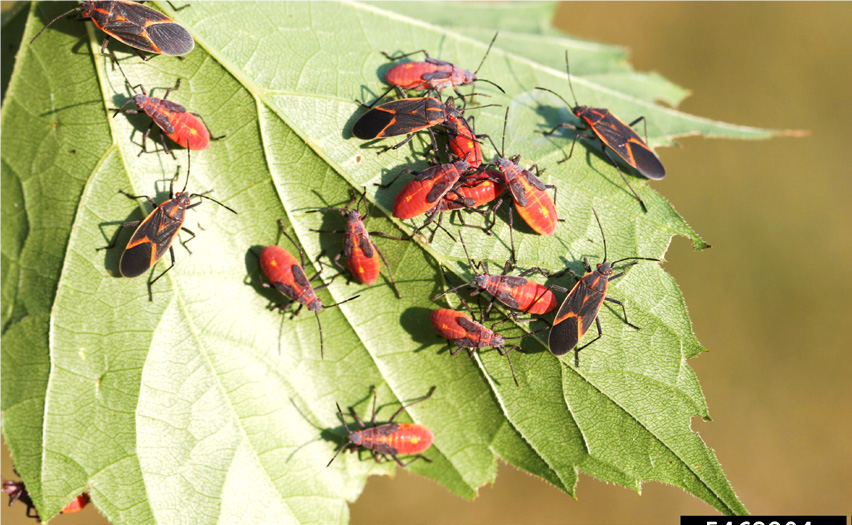
Black with distinctive red or orange lines on the wings and thorax. Flat, oval body, 12–14 mm long. Nymphs are bright red and smaller. Adults have fully developed wings and can fly short distances. Easy to identify by the bold red-on-black pattern — no similar-looking pest in Maryland.
🍂
Fall Aggregation
In September–November, adults congregate by the hundreds on sun-warmed south- and west-facing walls, seeking cracks and gaps to overwinter inside wall voids. Aggregation is triggered by cooling temperatures and shortening days. They cluster in tight masses on siding, around windows, and near rooflines.
🌳
Host Tree Connection
Boxelder bugs feed exclusively on seeds of boxelder trees (Acer negundo), maples, and ash. Female boxelder trees (seed-producing) are the primary attractant — properties with female boxelders within 200 feet will have significantly higher populations. They do not eat garden plants, structures, or stored food.
⚠️
Harmless — Nuisance Only
Boxelder bugs do not bite, sting, transmit disease, or damage structures. They do not breed indoors. However, they leave fecal spots that stain light-colored surfaces, and emit an unpleasant odor when crushed. Large indoor populations are alarming but cause no actual harm.
📋IPM Action Steps
1
Identify the Species
Confirm boxelder bug by the bold red/orange lines on black body, flat oval shape, and 12–14 mm length. Nymphs are bright red without fully developed wings. Distinguish from milkweed bugs (similar color, different pattern, found on milkweed plants) and small milkweed bugs.
2
Locate Host Trees
Survey the property and neighboring lots for female boxelder trees (seed-producing), maples, and ash within 200 feet. Female boxelders are the primary driver — identifying and flagging them is essential for long-term management. Note which direction bugs approach the structure from.
3
Exclusion — Seal Before October
Focus on south- and west-facing walls: caulk around windows, door frames, utility penetrations, soffits, and fascia gaps. Install door sweeps. Screen attic and soffit vents with fine mesh (1/16” or smaller). Seal where siding meets the foundation. Complete by late September before aggregation begins.
4
Vacuum or Soapy Water Removal Indoors
Vacuum live bugs with a shop-vac or bagged vacuum — dispose of bag promptly. For smaller numbers, sweep into a container of soapy water (1 tablespoon dish soap per quart). Never crush them on walls or fabrics — the fecal residue and crushed body stain permanently.
5
Soapy Water Spray on Outdoor Aggregations
Spray outdoor clusters directly with a soapy water solution (2 tablespoons dish soap per gallon of water). This is the most effective and safest contact kill for outdoor aggregations. Rinse siding afterward if concerned about soap residue. Highly effective, zero toxicity.
6
Botanical Repellent at Entry Points
Apply peppermint oil spray around exterior window frames, door frames, and soffits on south- and west-facing walls in September–October. Reapply every 5–7 days. This is a deterrent supplement to exclusion, not a standalone solution.
7
Consider Removing Female Boxelder Trees
The single most effective long-term solution. Removing female (seed-producing) boxelder trees within 200 feet of the structure dramatically reduces populations within one season. Discuss with the client and arborist. Male boxelders (non-seed-producing) do not attract bugs and can remain.
🛠️Prevention & Cultural Controls
🌳
Host Tree Management
Removing female boxelder trees is the most impactful single action. If removal isn’t possible, consider replacing with a male boxelder or different species. Clean up fallen seed pods promptly. Pruning seed-bearing branches reduces food supply but is less effective than full removal.
🔒
Exclusion — South & West Walls
Identical approach to stink bugs and Asian lady beetles. Caulk around windows, doors, utility penetrations, and where siding meets the foundation. Screen attic and soffit vents with fine mesh. Install tight-fitting door sweeps. Complete all work by late September.
🧹
Soapy Water for Outdoor Clusters
A simple spray bottle with 2 tablespoons dish soap per gallon of water kills boxelder bugs on contact by breaking down their waxy coating. Spray directly onto outdoor aggregations on walls, fences, and trees. Cheap, non-toxic, and more effective than any botanical spray for mass reduction.
⚗️Application Techniques
🔨 Exclusion — Caulk, Screen & Seal
  1. Walk the exterior and focus on south- and west-facing walls where sun warmth attracts aggregation.
  2. Caulk all gaps around windows, door frames, utility penetrations (cable, HVAC, plumbing), and where siding meets the foundation.
  3. Seal gaps at soffits, fascia boards, and roofline junctions with exterior-grade silicone or foam sealant.
  4. Screen attic vents and soffit vents with fine mesh (1/16” or smaller).
  5. Install or replace door sweeps on all exterior doors. Check garage door seal.
  6. Complete all work by late September before aggregation begins.
🧹 Soapy Water Spray — Outdoor Mass Reduction
  1. Mix 2 tablespoons dish soap per gallon of water in a pump sprayer or large spray bottle.
  2. Spray directly onto outdoor aggregations on walls, fences, window frames, and tree trunks. Saturate the cluster.
  3. Soap breaks down the waxy cuticle coating on the bugs, causing rapid dehydration and death within minutes.
  4. Rinse siding with a garden hose afterward if concerned about soap residue on painted surfaces.
  5. Repeat daily during peak aggregation (October). Most effective in afternoon when clusters are largest on sun-warmed walls.
  6. This is more effective than any botanical or synthetic spray for outdoor aggregations. Zero toxicity, zero residue.
🌿 Botanical Repellent — Entry Point Deterrent
  1. Apply peppermint oil spray around exterior window frames, door frames, and soffits on south- and west-facing walls.
  2. Begin applications in mid-September, before bugs begin aggregating.
  3. Spray a 6–12 inch band around entry points and along the roofline.
  4. Reapply every 5–7 days outdoors, or after rain.
  5. This is a deterrent supplement to exclusion, not a standalone solution. Without sealing gaps, repellent alone will not prevent entry.
🛒Recommended Products
🧹
Soapy Water Spray Bottle
2 tablespoons dish soap per gallon of water in a pump sprayer. The most effective outdoor contact kill for boxelder bug aggregations. Breaks down waxy cuticle coating, causing rapid dehydration. Zero toxicity, zero cost. Repeat daily during peak fall aggregation.
Contact Kill / Non-Toxic
🌱
Mighty Mint Peppermint Oil Spray
Concentrated peppermint oil in water base. Apply at exterior entry points on south- and west-facing walls in September–October. Pleasant scent, safe for families and pets once dry. Reapply weekly or after rain. Supplement to exclusion.
Botanical / Repellent
🔨
Exterior Caulk & Weather Stripping
Exterior-grade silicone caulk for gaps around windows, doors, and utility penetrations. Foam sealant for larger gaps at soffits and roofline. Replacement door sweeps and weather stripping. The primary and most effective tool for boxelder bug management.
Exclusion / Prevention
💡
Yellow Bug Light Bulbs
Replace white porch lights with yellow or amber LED bulbs. These emit wavelengths less attractive to boxelder bugs and other fall invaders. Reduces congregation near entry doors. Available at any hardware store.
Environmental / Prevention
▶️Training Videos
🔨
Exclusion
Fall Pest Exclusion — Sealing South & West Walls
Caulking windows, sealing soffits, screening vents, and installing door sweeps before October aggregation season.
Search: Fall Pest Exclusion Home Sealing Tutorial
🧹
Soapy Water
Soapy Water Spray for Boxelder Bug Aggregations
Mixing ratios, pump sprayer technique, targeting outdoor clusters on walls and tree trunks, and rinsing siding afterward.
Search: Boxelder Bug Soapy Water Spray DIY
🌿
Botanical Spray
Peppermint Oil Repellent — Pre-Season Perimeter Application
Spray technique at entry points on south and west walls. Timing, coverage band, and reapplication schedule for fall invader deterrence.
Search: Peppermint Oil Spray Fall Pest Repellent
🌳
Host Tree ID
Identifying Female Boxelder Trees — The Root Cause
How to identify female (seed-producing) boxelder trees, why they attract bugs, and long-term removal or replacement options.
Search: Female Boxelder Tree Identification Seed Pods
⚠️Warnings & Herbal Shield Standards
🔬
Purely Nuisance — No Harm: Boxelder bugs do not bite, sting, transmit disease, damage structures, or breed indoors. They are strictly a visual and odor nuisance. Treatment should focus on keeping them outside and reducing populations through host tree management, not chemical elimination.
⚠️
Do NOT Crush — Staining Risk: Crushed boxelder bugs and their fecal spots permanently stain walls, curtains, and light-colored fabrics. Always vacuum or sweep into soapy water. Never swat bugs resting on surfaces. Educate the client to avoid squishing.
🧹
Soapy Water Is the Best Contact Kill: A simple dish-soap-and-water solution is more effective than any botanical or synthetic spray for outdoor aggregations. It breaks down the waxy cuticle coating, causing rapid dehydration. Zero toxicity, zero environmental impact, zero cost. This is the go-to field tool.
🚫
No Foggers or Broadcast Sprays: Indoor foggers and synthetic perimeter sprays are ineffective against wall-void populations, kill beneficial insects, contaminate living spaces, and are inconsistent with the Herbal Shield brand promise. Bifenthrin, permethrin, and similar synthetics are never used.
🌳
Host Tree Removal Is the Long-Term Fix: Removing female (seed-producing) boxelder trees within 200 feet of the structure dramatically reduces populations within one season. This is the highest-impact recommendation for persistent infestations. Male boxelders can remain.
💬
Client Script: “These are boxelder bugs — the red-and-black insects clustering on your sunny walls. They’re completely harmless: they don’t bite, they don’t breed inside, and they don’t damage anything. The main issue is they stain surfaces if you crush them, and they show up in large numbers which is understandably alarming. They’re here because there’s a female boxelder tree nearby producing the seeds they feed on. We’ll seal up the entry points so they can’t get inside, and use soapy water to knock down the outdoor clusters.”
💬
Client Script — Why We Don’t Spray: “The reason we use soapy water and exclusion instead of chemical sprays is that boxelder bugs are coming from the trees, not from inside your home. Spraying the walls kills the ones you see today, but more fly in from the tree tomorrow. Soapy water is actually more effective as a contact kill — it breaks down their waxy coating instantly — and sealing the gaps is what stops them from getting inside. If you want a permanent reduction, the biggest single step is removing the female boxelder tree. That cuts the population at the source.”