Herbal Shield"}]}
Maryland's most common stored-food pest. Larvae silently infest grains, flour, nuts, dried fruit, spices, pet food, and bird seed — leaving fine webbing, frass, and clumped food as evidence. Treatment is entirely non-chemical: deep pantry excavation, airtight storage, and pheromone monitoring. No pesticide sprays are ever appropriate in food-storage areas.
Field call: how much pest pressure is on the property. Determines urgency, treatment intensity, and whether botanical alone is enough or whether escalation-consent should be discussed.
| Latin Name | Plodia interpunctella |
| Common Name | Indian Meal Moth |
| Adult Size | 3/8" body · 5/8" wingspan |
| Wing Pattern | Gray inner half · Bronze-rusty outer half |
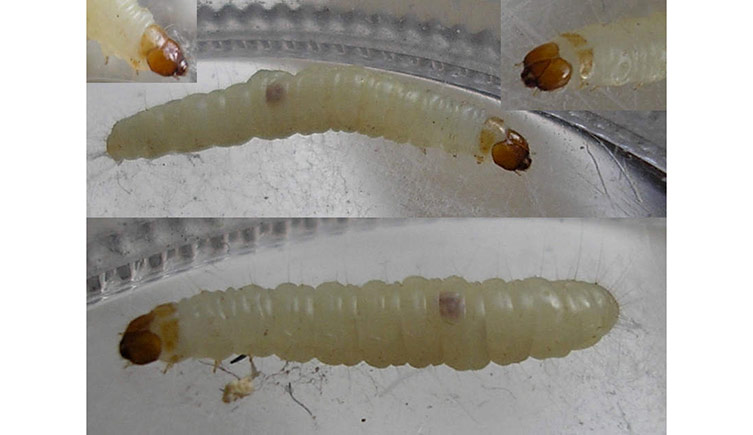
| Damaging Stage | Larva — cream colored with brown head capsule |
| Life Cycle | 27–305 days (temperature-dependent) |
| Eggs per Female | 100–400 |
| Primary Entry | Infested purchased food (especially bulk grains, bird seed) |
| Key Evidence | Silk webbing · Frass · Clumped food · Adults at windows |
| Treatment | Discard infested food → clean → seal cracks → airtight storage → pheromone trap |
| Pesticide Use | Never in food storage areas |
| Monitoring Tool | Pheromone sticky trap · Replace every 3 months |
| Prevention | Airtight glass containers + freeze new bulk food before pantry storage |
Call and walk us through what you're seeing. We'll tell you what we can treat, what we can't, and what it costs — and if it falls outside our license, we'll say so and point you to someone who holds it.
Greater Baltimore & the DC-metro counties · MDA Categories 7A + 7D licensed · what we do & don't do